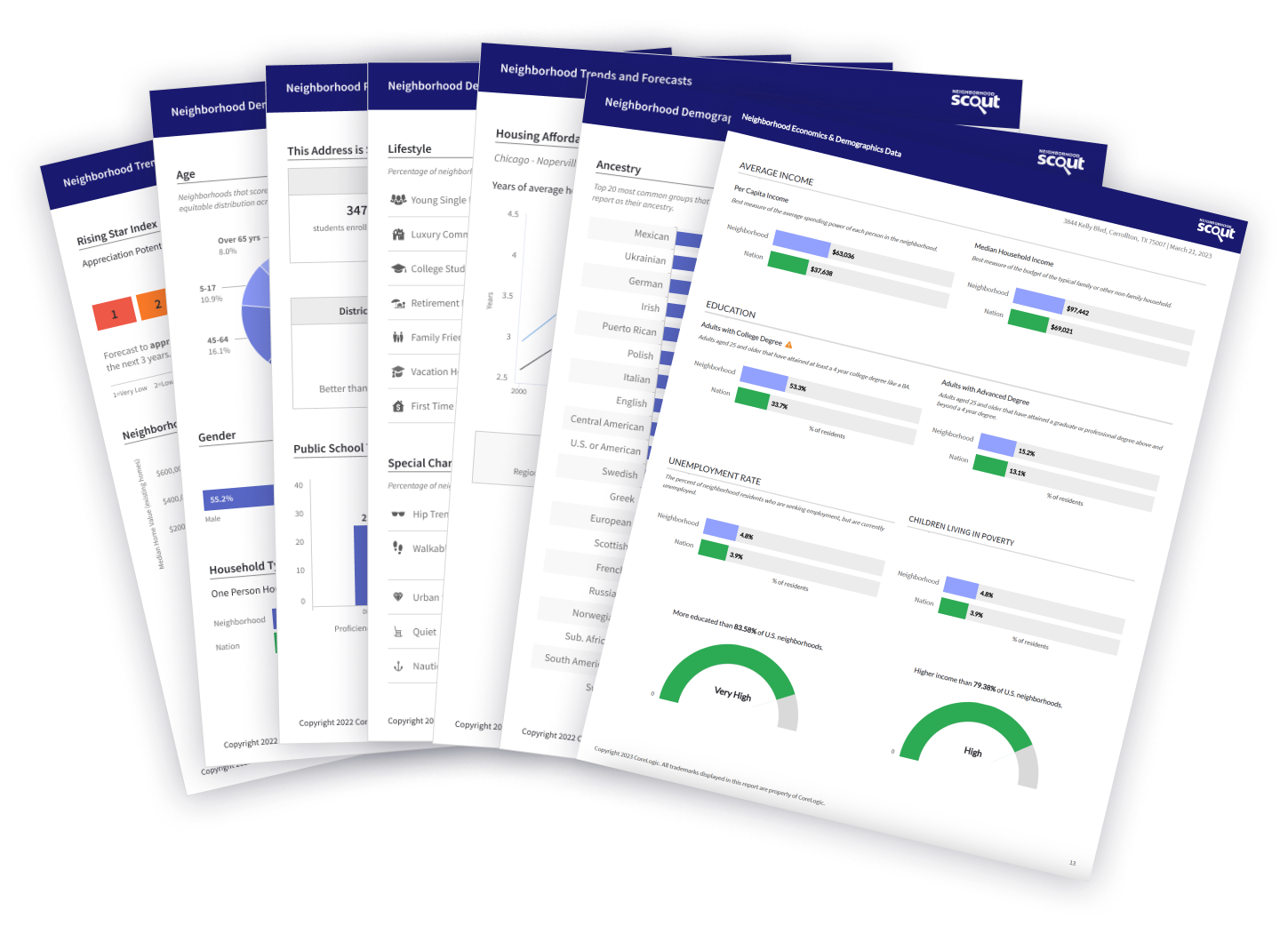
Median real estate price in the City Center of Wynne is $89,139, which is less expensive than 87.4% of Arkansas neighborhoods and 95.5% of all U.S. neighborhoods.
The average rental price in Wynne City Center is currently $1,212, based on NeighborhoodScout's exclusive analysis. Rents here are currently lower in price than 58.2% of Arkansas neighborhoods.
Wynne City Center is a rural neighborhood (based on population density) located in Wynne, Arkansas.
Real estate in the City Center of Wynne, AR is primarily made up of medium sized (three or four bedroom) to small (studio to two bedroom) single-family homes and small apartment buildings. Most of the residential real estate is occupied by a mixture of owners and renters. Many of the residences in the City Center neighborhood are established but not old, having been built between 1970 and 1999. A number of residences were also built between 1940 and 1969.
Vacant apartments or homes are a major fact of life in Wynne City Center. The current real estate vacancy rate here is 15.9%. This is higher than the rate of vacancies in 81.8% of all U.S. neighborhoods. In addition, most vacant housing here is vacant year round. This can sometimes be the case in neighborhoods dominated by new construction that is not yet occupied. But often neighborhoods with vacancy rates this high are places that can be plagued by a protracted vacancy problem. If you live here, you may find that a number of buildings in your neighborhood are actually empty.
The way a neighborhood looks and feels when you walk or drive around it, from its setting, its buildings, and its flavor, can make all the difference. This neighborhood has some really cool things about the way it looks and feels as revealed by NeighborhoodScout's exclusive research. This might include anything from the housing stock to the types of households living here to how people get around.
Single parenting is hard. But you don't have to tell the Wynne City Center neighborhood about it; they already know. 20.7% of this neighborhood's households are run by single mothers, which is a higher concentration than NeighborhoodScout found in 97.4% of American neighborhoods. Further NeighborhoodScout research showed strong statistical correlations among high rates of children living in single parent households, and neighborhood crime, particularly violent crime, neighborhood poverty, and, importantly, the percentage of low weight births and rates of infant mortality.
In addition, according to NeighborhoodScout's research, Wynne City Center is better suited for first-time home buyers than 86.9% of neighborhoods in the state. Most homes here are priced below the state's median house value, yet maintain comparably good appreciation rates over the last decade relative to other neighborhoods in Arkansas. Along with an exclusive multi-metric measure of neighborhood quality developed by NeighborhoodScout that scores high here in this neighborhood, this means that buying into the neighborhood is not only an accessible option but considered a decent first time home buyer choice for building equity in your first home, while being in a quality neighborhood
Our research shows that more people carpool to work here in the Wynne City Center (24.9%) than in 96.8% of the neighborhoods in America.
Significantly, 8.1% of its residents five years old and above primarily speak Tagalog, which is the first language of the Philippine region, at home. While this may seem like a small percentage, it is higher than 99.2% of the neighborhoods in America.
There are two complementary measures for understanding the income of a neighborhood's residents: the average and the extremes. While a neighborhood may be relatively wealthy overall, it is equally important to understand the rate of people - particularly children - who are living at or below the federal poverty line, which is extremely low income. Some neighborhoods with a lower average income may actually have a lower childhood poverty rate than another with a higher average income, and this helps us understand the conditions and character of a neighborhood.
The neighbors in the City Center neighborhood in Wynne are low income, making it among the lowest income neighborhoods in America. NeighborhoodScout's research shows that this neighborhood has an income lower than 92.1% of U.S. neighborhoods. With 45.1% of the children here below the federal poverty line, this neighborhood has a higher rate of childhood poverty than 92.3% of U.S. neighborhoods.
A neighborhood is far different if it is dominated by enlisted military personnel rather than people who earn their living by farming. It is also different if most of the neighbors are clerical support or managers. What is wonderful is the sheer diversity of neighborhoods, allowing you to find the type that fits your lifestyle and aspirations.
In the Wynne City Center neighborhood, 35.2% of the working population is employed in manufacturing and laborer occupations. The second most important occupational group in this neighborhood is sales and service jobs, from major sales accounts, to working in fast food restaurants, with 25.0% of the residents employed. Other residents here are employed in executive, management, and professional occupations (24.5%), and 14.4% in clerical, assistant, and tech support occupations.
The languages spoken by people in this neighborhood are diverse. These are tabulated as the languages people preferentially speak when they are at home with their families. The most common language spoken in the Wynne City Center neighborhood is English, spoken by 89.3% of households. Other important languages spoken here include Tagalog (the first language of the Philippine region) and Spanish.
Boston's Beacon Hill blue-blood streets, Brooklyn's Orthodox Jewish enclaves, Los Angeles' Persian neighborhoods. Each has its own culture derived primarily from the ancestries and culture of the residents who call these neighborhoods home. Likewise, each neighborhood in America has its own culture – some more unique than others – based on lifestyle, occupations, the types of households – and importantly – on the ethnicities and ancestries of the people who live in the neighborhood. Understanding where people came from, who their grandparents or great-grandparents were, can help you understand how a neighborhood is today.
In the City Center neighborhood in Wynne, AR, residents most commonly identify their ethnicity or ancestry as Asian (10.3%). There are also a number of people of Irish ancestry (7.0%), and residents who report English roots (4.8%), and some of the residents are also of Mexican ancestry (4.2%), along with some German ancestry residents (3.3%), among others.
How you get to work – car, bus, train or other means – and how much of your day it takes to do so is a large quality of life and financial issue. Especially with gasoline prices rising and expected to continue doing so, the length and means of one's commute can be a financial burden. Some neighborhoods are physically located so that many residents have to drive in their own car, others are set up so many walk to work, or can take a train, bus, or bike. The greatest number of commuters in Wynne City Center neighborhood spend under 15 minutes commuting one-way to work (46.4% of working residents), one of the shortest commutes across America.
Here most residents (73.7%) drive alone in a private automobile to get to work. In addition, quite a number also carpool with coworkers, friends, or neighbors to get to work (24.9%) . In a neighborhood like this, as in most of the nation, many residents find owning a car useful for getting to work.