menu


Real Estate Prices & Overview

Bond / Harrison median real estate price is $281,971, which is more expensive than 37.4% of the neighborhoods in Georgia and 34.3% of the neighborhoods in the U.S.

The average rental price in Bond / Harrison is currently $1,300, based on NeighborhoodScout's exclusive analysis. Rents here are currently lower in price than 87.0% of Georgia neighborhoods.

Bond / Harrison is a remote neighborhood (based on population density) located in Danielsville, Georgia.

Bond / Harrison real estate is primarily made up of medium sized (three or four bedroom) to small (studio to two bedroom) single-family homes and mobile homes. Most of the residential real estate is owner occupied. Many of the residences in the Bond / Harrison neighborhood are established but not old, having been built between 1970 and 1999. A number of residences were also built between 2000 and the present.

Vacant apartments or homes are a major fact of life in Bond / Harrison. The current real estate vacancy rate here is 16.8%. This is higher than the rate of vacancies in 83.6% of all U.S. neighborhoods. In addition, most vacant housing here is vacant year round. This can sometimes be the case in neighborhoods dominated by new construction that is not yet occupied. But often neighborhoods with vacancy rates this high are places that can be plagued by a protracted vacancy problem. If you live here, you may find that a number of buildings in your neighborhood are actually empty.

Notable & Unique Neighborhood Characteristics

Many things matter about a neighborhood, but the first thing most people notice is the way a neighborhood looks and its particular character. For example, one might notice whether the buildings all date from a certain time period or whether shop signs are in multiple languages. This particular neighborhood in Danielsville, the Bond / Harrison neighborhood, has some outstanding things about the way it looks and its way of life that are worth highlighting.

People

In a nation where 1 out of every 4 children lives in poverty, the Bond / Harrison neighborhood stands out as being ranked among the lowest 0.0% of neighborhoods affected by this global issue.

Modes of Transportation

Our research reveals that 97.3% of commuters who live in the Bond / Harrison neighborhood get to work each day by driving alone in their automobiles, which is a higher proportion than 99.9% of U.S. neighborhoods.

Car Ownership

American households most often have a car, and regularly they have two or three. But households in the Bond / Harrison neighborhood buck this trend. Residents of this neighborhood must really love automobiles. NeighborhoodScout's Analysis reveals that 46.3% of the households here have four, five, or more cars. That is more cars per household than in 99.3% of the neighborhoods in the nation.

Real Estate

The real estate in this neighborhood consists of more mobile homes than 95.5% of all neighborhoods in America, with 30.6% of the occupied housing here being classified as mobile homes. So if you are looking for a mobile home, or you like the look and feel of mobile home parks, this neighborhood might have the setting you desire.

Migration / Stability

The freedom of moving to new places versus the comfort of home. How much and how often people move not only can create diverse and worldly neighborhoods, but simultaneously it can produce a loss of intimacy with one's surroundings and a lack of connectedness to one's neighbors. NeighborhoodScout's exclusive research has identified this neighborhood as unique with regard to the transience of its populace. More residents of the Bond / Harrison neighborhood live here today that also were living in this same neighborhood five years ago than is found in 95.7% of U.S. neighborhoods. This neighborhood is really made up of people who know each other, don't move often, and have lived here in this very neighborhood for quite a while.

The Neighbors

How wealthy a neighborhood is, from very wealthy, to middle income, to low income is very formative with regard to the personality and character of a neighborhood. Equally important is the rate of people, particularly children, who live below the federal poverty line. In some wealthy gated communities, the areas immediately surrounding can have high rates of childhood poverty, which indicates other social issues. NeighborhoodScout's analysis reveals both aspects of income and poverty for this neighborhood.

The neighbors in the Bond / Harrison neighborhood in Danielsville are lower-middle income, making it a below average income neighborhood. NeighborhoodScout's research shows that this neighborhood has an income lower than 70.5% of U.S. neighborhoods. In addition, 0.0% of the children seventeen and under living in this neighborhood are living below the federal poverty line, which is a lower rate of childhood poverty than is found in 100.0% of America's neighborhoods.

A neighborhood is far different if it is dominated by enlisted military personnel rather than people who earn their living by farming. It is also different if most of the neighbors are clerical support or managers. What is wonderful is the sheer diversity of neighborhoods, allowing you to find the type that fits your lifestyle and aspirations.

In the Bond / Harrison neighborhood, 33.5% of the working population is employed in manufacturing and laborer occupations. The second most important occupational group in this neighborhood is executive, management, and professional occupations, with 30.5% of the residents employed. Other residents here are employed in sales and service jobs, from major sales accounts, to working in fast food restaurants (19.1%), and 16.9% in clerical, assistant, and tech support occupations.

Languages

The languages spoken by people in this neighborhood are diverse. These are tabulated as the languages people preferentially speak when they are at home with their families. The most common language spoken in the Bond / Harrison neighborhood is English, spoken by 96.0% of households. Other important languages spoken here include Spanish and Polish.

Ethnicity / Ancestry

Culture is the shared learned behavior of peoples. Undeniably, different ethnicities and ancestries have different cultural traditions, and as a result, neighborhoods with concentrations of residents of one or another ethnicities or ancestries will express those cultures. It is what makes the North End in Boston so fun to visit for the Italian restaurants, bakeries, culture, and charm, and similarly, why people enjoy visiting Chinatown in San Francisco.

In the Bond / Harrison neighborhood in Danielsville, GA, residents most commonly identify their ethnicity or ancestry as English (12.6%). There are also a number of people of Irish ancestry (8.7%), and residents who report German roots (5.1%), and some of the residents are also of Polish ancestry (1.3%).

Getting to Work

How you get to work – car, bus, train or other means – and how much of your day it takes to do so is a large quality of life and financial issue. Especially with gasoline prices rising and expected to continue doing so, the length and means of one's commute can be a financial burden. Some neighborhoods are physically located so that many residents have to drive in their own car, others are set up so many walk to work, or can take a train, bus, or bike. The greatest number of commuters in Bond / Harrison neighborhood spend between 30 and 45 minutes commuting one-way to work (48.3% of working residents), which is at or a bit above the average length of a commute across all U.S. neighborhoods.

Here most residents (97.3%) drive alone in a private automobile to get to work. In a neighborhood like this, as in most of the nation, many residents find owning a car useful for getting to work.


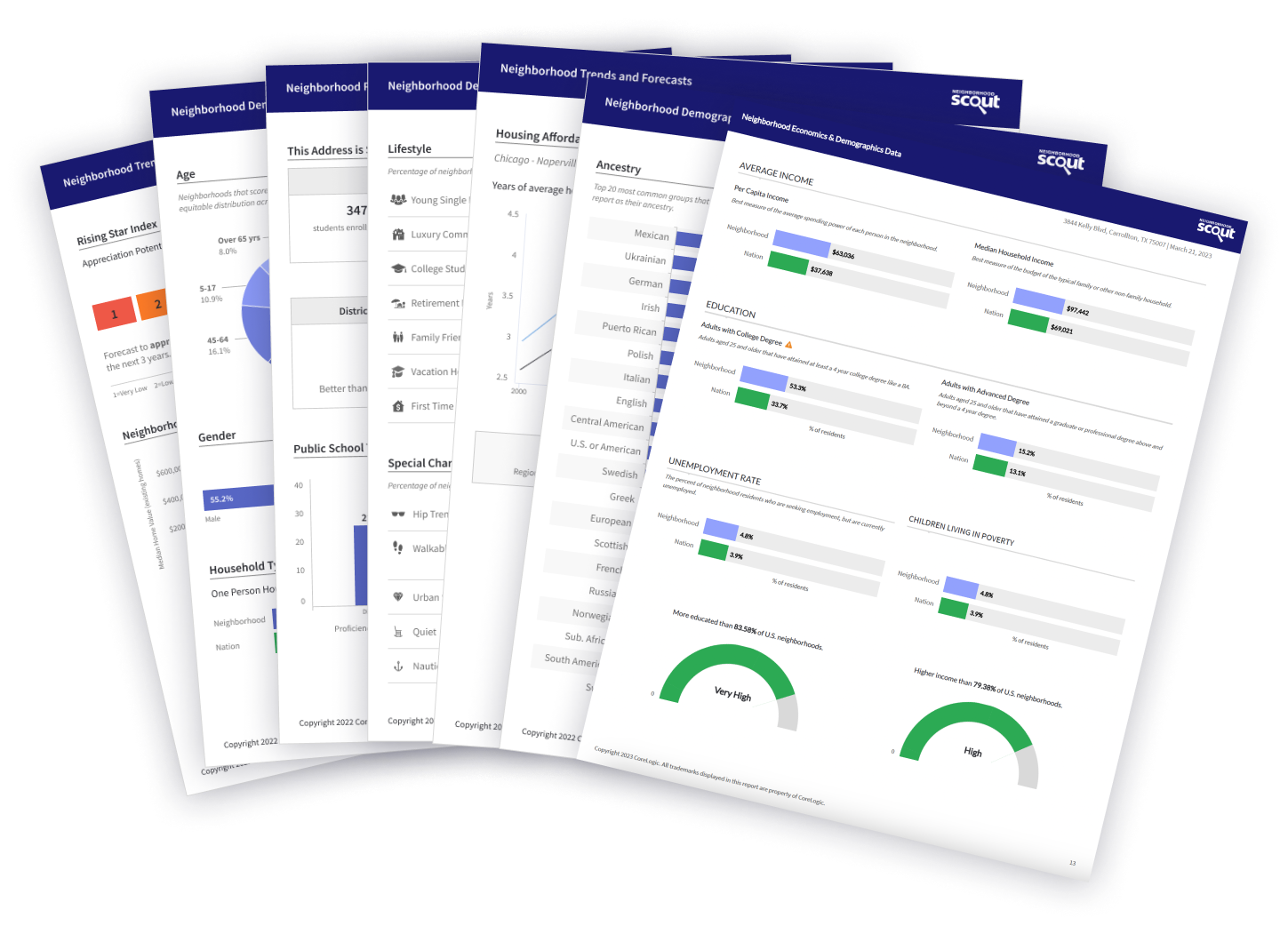
Real Estate includes:
Average Home Values
Rental Market
Housing Market Details
Neighborhood Setting
Economics & Demographics include:
Lifestyle & Special Character
Household Types
Commute To Work
Migration & Mobility
Race & Ethnic Diversity
Employment Industries & Occupations
Income & Unemployment Rate
Higher Education Attainment
Crime includes:
Neighborhood Crime Index
Crimes Per Square Mile
Property Crime Comparison
Violent Crime Comparison
Schools include:
School Ratings
Schools In District
Public School Test Scores
School District Enrollment
Educational Expenditures

comparable neighborhoods nearby