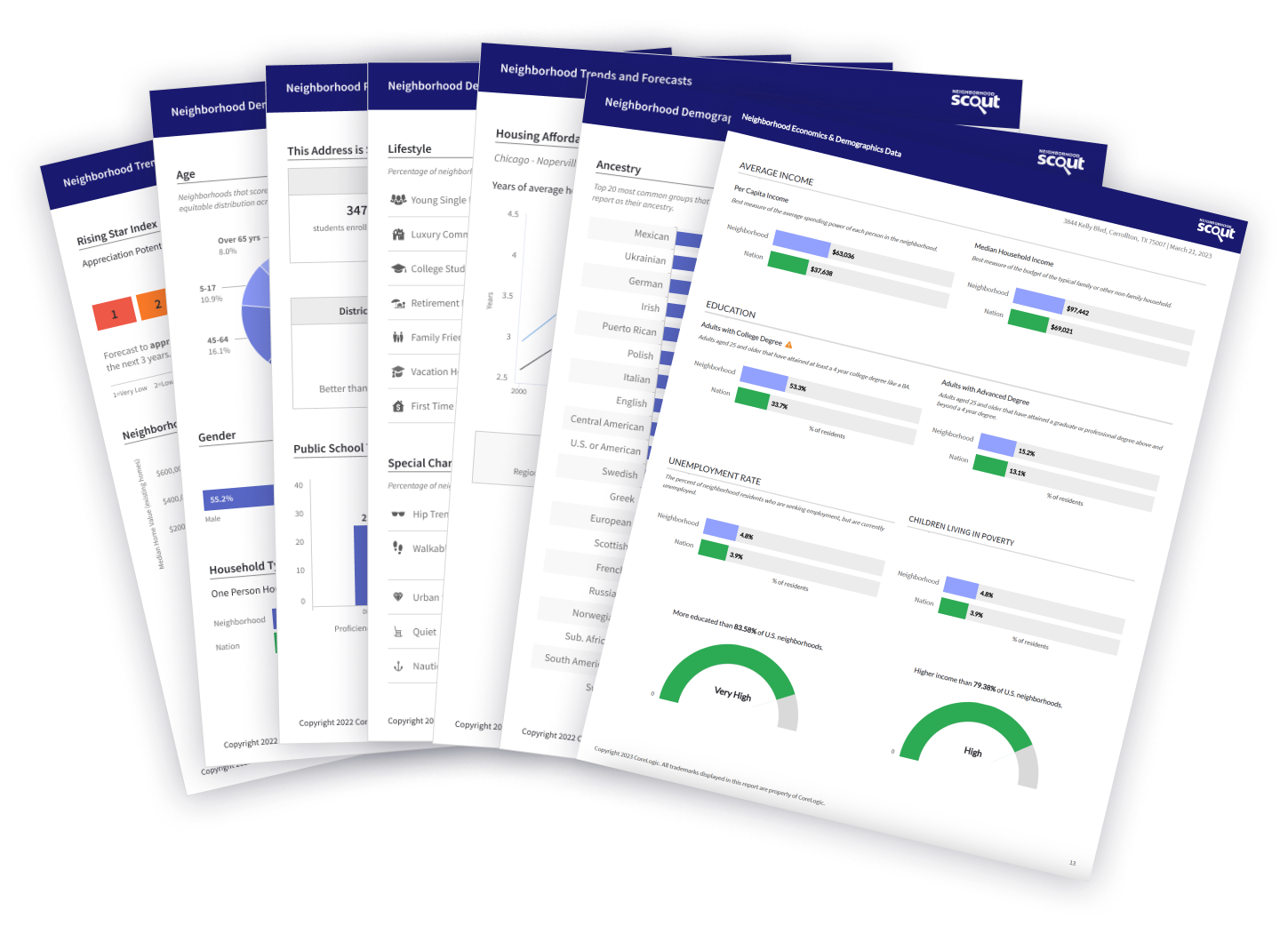
Priest River is a very small city located in the state of Idaho. With a population of 1,847 people and just one neighborhood, Priest River is the 81st largest community in Idaho.
When you are in Priest River, you'll notice that it is more blue-collar than most other communities in America. 35.82% of Priest River’s employed work in blue-collar jobs, while America averages only 27.7% that do. Overall, Priest River is a city of service providers, sales and office workers, and construction workers and builders. There are especially a lot of people living in Priest River who work in maintenance occupations (10.28%), management occupations (8.04%), and office and administrative support (7.80%).
The city is relatively quiet, having a combination of lower population density and few of those groups of people who have a tendency to be noisy. For example, Priest River has relatively fewer families with younger children, and/or college students. Combined, this makes Priest River a pretty quiet place to live overall. If you like quiet, you will probably enjoy it here.
The citizens of Priest River have a very low rate of college education: just 9.80% of people over 25 have a bachelor's degree or advanced degree, compared to a national average of 21.84% for all cities.
The per capita income in Priest River in 2022 was $32,957, which is upper middle income relative to Idaho, and middle income relative to the rest of the US. This equates to an annual income of $131,828 for a family of four. However, Priest River contains both very wealthy and poor people as well.
Priest River is a somewhat ethnically-diverse city. The people who call Priest River home describe themselves as belonging to a variety of racial and ethnic groups. The greatest number of Priest River residents report their race to be White, followed by Native American. Important ancestries of people in Priest River include German, Irish, English, Norwegian, and Italian.
The most common language spoken in Priest River is English. Other important languages spoken here include Italian and Polish.
Many things matter about a neighborhood, but the first thing most people notice is the way a neighborhood looks and its particular character. For example, one might notice whether the buildings all date from a certain time period or whether shop signs are in multiple languages. This particular neighborhood in Priest River, the neighborhood, has some outstanding things about the way it looks and its way of life that are worth highlighting.
Did you know that the neighborhood has more Canadian and Czechoslovakian ancestry people living in it than nearly any neighborhood in America? It's true! In fact, 1.7% of this neighborhood's residents have Canadian ancestry and 0.5% have Czechoslovakian ancestry.
is also pretty special linguistically. Significantly, 1.9% of its residents five years old and above primarily speak Greek at home. While this may seem like a small percentage, it is higher than 99.0% of the neighborhoods in America.
There are two complementary measures for understanding the income of a neighborhood's residents: the average and the extremes. While a neighborhood may be relatively wealthy overall, it is equally important to understand the rate of people - particularly children - who are living at or below the federal poverty line, which is extremely low income. Some neighborhoods with a lower average income may actually have a lower childhood poverty rate than another with a higher average income, and this helps us understand the conditions and character of a neighborhood.
The neighbors in the neighborhood in Priest River are lower-middle income, making it a below average income neighborhood. NeighborhoodScout's research shows that this neighborhood has an income lower than 75.3% of U.S. neighborhoods. In addition, 7.4% of the children seventeen and under living in this neighborhood are living below the federal poverty line, which is a lower rate of childhood poverty than is found in 56.9% of America's neighborhoods.
A neighborhood is far different if it is dominated by enlisted military personnel rather than people who earn their living by farming. It is also different if most of the neighbors are clerical support or managers. What is wonderful is the sheer diversity of neighborhoods, allowing you to find the type that fits your lifestyle and aspirations.
In the neighborhood, 37.3% of the working population is employed in manufacturing and laborer occupations. The second most important occupational group in this neighborhood is sales and service jobs, from major sales accounts, to working in fast food restaurants, with 26.8% of the residents employed. Other residents here are employed in executive, management, and professional occupations (23.1%), and 12.8% in clerical, assistant, and tech support occupations.
The most common language spoken in the neighborhood is English, spoken by 98.8% of households. Some people also speak Italian (5.3%).
Culture is the shared learned behavior of peoples. Undeniably, different ethnicities and ancestries have different cultural traditions, and as a result, neighborhoods with concentrations of residents of one or another ethnicities or ancestries will express those cultures. It is what makes the North End in Boston so fun to visit for the Italian restaurants, bakeries, culture, and charm, and similarly, why people enjoy visiting Chinatown in San Francisco.
In the neighborhood in Priest River, ID, residents most commonly identify their ethnicity or ancestry as German (22.9%). There are also a number of people of Irish ancestry (17.3%), and residents who report English roots (11.5%), and some of the residents are also of Norwegian ancestry (4.5%), along with some Italian ancestry residents (3.9%), among others.
Even if your neighborhood is walkable, you may still have to drive to your place of work. Some neighborhoods are located where many can get to work in just a few minutes, while others are located such that most residents have a long and arduous commute. The greatest number of commuters in neighborhood spend under 15 minutes commuting one-way to work (34.8% of working residents), one of the shortest commutes across America.
Here most residents (76.6%) drive alone in a private automobile to get to work. In addition, quite a number also carpool with coworkers, friends, or neighbors to get to work (8.9%) . In a neighborhood like this, as in most of the nation, many residents find owning a car useful for getting to work.