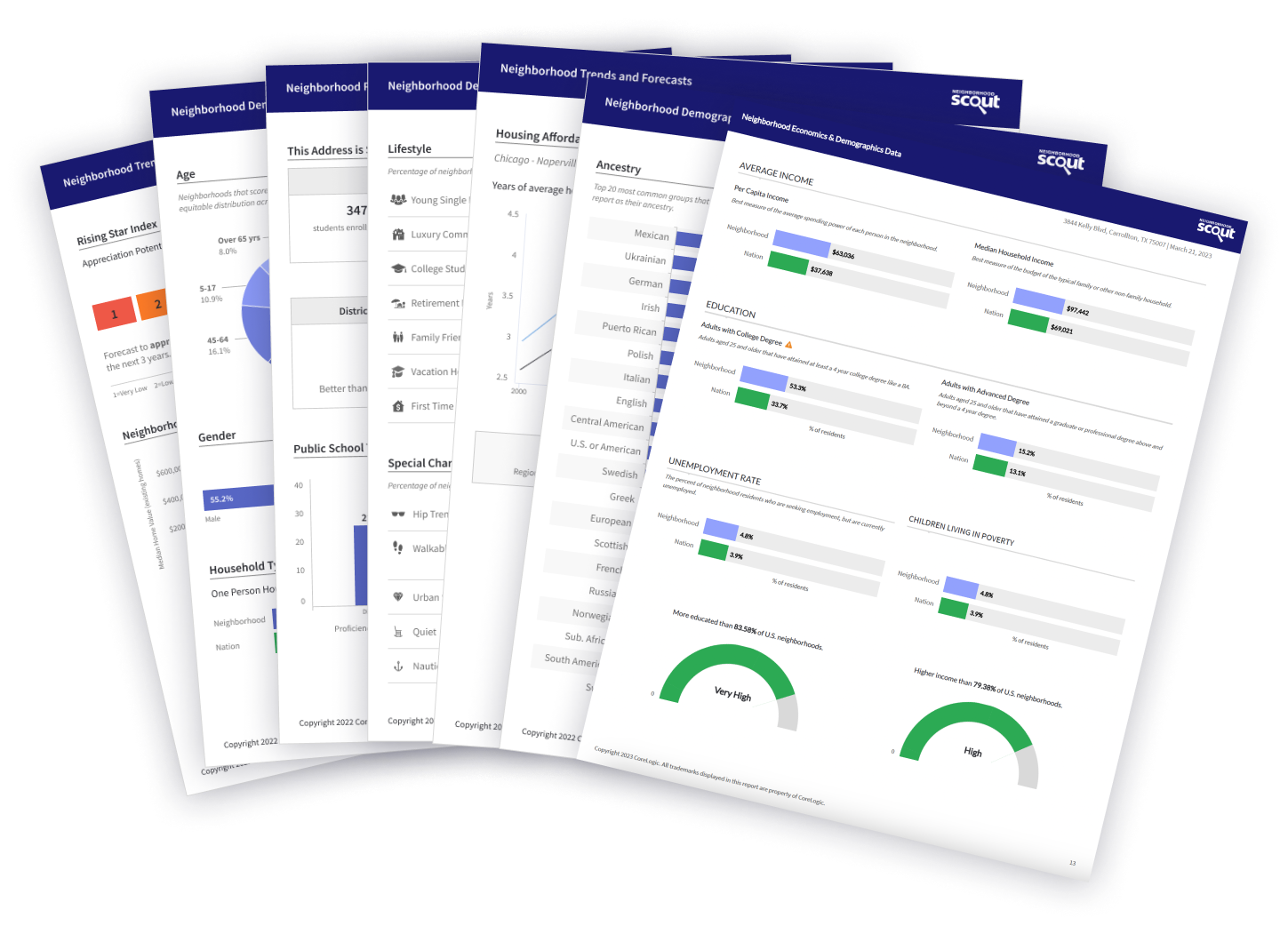
Makinen is a very small town located in the state of Minnesota. With a population of 1,511 people and just one neighborhood, Makinen is the 358th largest community in Minnesota.
Because occupations involving physical labor dominate the local economy, Makinen is generally considered to be a blue-collar town. 36.13% of the Makinen workforce is employed in blue-collar occupations, compared to the national average of 27.7%. Overall, Makinen is a town of sales and office workers, service providers, and transportation and shipping workers. There are especially a lot of people living in Makinen who work in office and administrative support (14.49%), sales jobs (6.81%), and law enforcement and fire fighting (5.93%).
One interesting thing about the economy is that relatively large numbers of people worked from their home: 8.23% of the workforce. While this number may seem small overall, as a fraction of the total workforce this is high compared to the rest of the county. These workers are often telecommuters who work in knowledge-based, white-collar professions. For example, Silicon Valley has large numbers of people who telecommute. Other at-home workers may be self-employed people who operate small businesses out of their homes.
Another notable thing is that Makinen is an extremely popular destination for tourists and seasonal residents. So much of the population is seasonal such that the town’s population swells significantly during the vacation season, and drops again when the season ends. Because of this, much of the local economy is centered around tourism; some businesses may be operated only during the high season. During the low season, year-round residents will notice that the city is a substantially quieter place to live.
The town is relatively quiet, having a combination of lower population density and few of those groups of people who have a tendency to be noisy. For example, Makinen has relatively fewer families with younger children, and/or college students. Combined, this makes Makinen a pretty quiet place to live overall. If you like quiet, you will probably enjoy it here.
One downside of living in Makinen, however, is that residents on average have to contend with a long commute, spending on average 32.88 minutes every day commuting to work.
As is often the case in a small town, Makinen doesn't have a public transportation system that people use for their commute.
The overall education level of Makinen is somewhat higher than in the average US city of 21.84%: 25.44% of adults 25 and older in the town have at least a bachelor's degree.
The per capita income in Makinen in 2022 was $43,077, which is upper middle income relative to Minnesota and the nation. This equates to an annual income of $172,308 for a family of four. However, Makinen contains both very wealthy and poor people as well.
The people who call Makinen home describe themselves as belonging to a variety of racial and ethnic groups. The greatest number of Makinen residents report their race to be White, followed by Asian. Important ancestries of people in Makinen include German, Finnish, Norwegian, Swedish, and Irish.
The most common language spoken in Makinen is English. Other important languages spoken here include Spanish and Polish.
When you see a neighborhood for the first time, the most important thing is often the way it looks, like its homes and its setting. Some places look the same, but they only reveal their true character after living in them for a while because they contain a unique mix of occupational or cultural groups. This neighborhood is very unique in some important ways, according to NeighborhoodScout's exclusive exploration and analysis.
Of note is NeighborhoodScout's research finding that the neighborhood has some of the lowest rates of children living in poverty of any neighborhood in the United States. In a nation where approximately 1 in 4 children are living in poverty, the community truly stands out from the rest in this regard.
In addition, if you're planning where to retire, the neighborhood in Makinen is a great option to consider. According to NeighborhoodScout's exclusive retirement dream area analysis, it's peaceful and quiet, has above average safety ratings compared to other neighborhoods in MN, offers a wide range of housing options, and has already attracted an enviable mix of college educated seniors. This neighborhood ranks as better for retirement living than 86.0% of the neighborhoods in Minnesota. If you are considering retiring to Minnesota, this is a good neighborhood to look at.
Vacant homes and apartments are a significant characteristic of this neighborhood. In fact, with 53.3% of the residential real estate vacant, the neighborhood claims the distinction of having a higher vacancy rate than 99.1% of the neighborhoods in America. This can either be because much of the property is seasonally occupied, like in many vacation areas, or that much of the real estate is more permanently abandoned.
In addition, uncrowded roads, rural America and space to be the individual you are. If you like these characteristics, this neighborhood may fit you. With just 3 residents per square mile, is less crowded than 98.7% of all U.S. neighborhoods. One of the notable things about is that it is one of the quietest neighborhoods in America, according to NeighborhoodScout's exclusive analysis and quantitative rating of quietness. When you are here, you will find it to be very quiet. If quiet and peaceful are your cup of tea, you may have found a great place for you.
The neighborhood has a greater proportion of government workers living in it than 96.8% of the neighborhoods in America, according to NeighborhoodScout's exclusive analysis. This is a unique feature of this neighborhood, and one that shapes its character.
Did you know that the neighborhood has more Finnish and Swedish ancestry people living in it than nearly any neighborhood in America? It's true! In fact, 16.9% of this neighborhood's residents have Finnish ancestry and 12.1% have Swedish ancestry.
There are two complementary measures for understanding the income of a neighborhood's residents: the average and the extremes. While a neighborhood may be relatively wealthy overall, it is equally important to understand the rate of people - particularly children - who are living at or below the federal poverty line, which is extremely low income. Some neighborhoods with a lower average income may actually have a lower childhood poverty rate than another with a higher average income, and this helps us understand the conditions and character of a neighborhood.
The neighbors in the neighborhood in Makinen are middle-income, making it a moderate income neighborhood. NeighborhoodScout's exclusive analysis reveals that this neighborhood has a higher income than 47.3% of the neighborhoods in America. In addition, 0.0% of the children seventeen and under living in this neighborhood are living below the federal poverty line, which is a lower rate of childhood poverty than is found in 100.0% of America's neighborhoods.
What we choose to do for a living reflects who we are. Each neighborhood has a different mix of occupations represented, and together these tell you about the neighborhood and help you understand if this neighborhood may fit your lifestyle.
In the neighborhood, 36.1% of the working population is employed in manufacturing and laborer occupations. The second most important occupational group in this neighborhood is sales and service jobs, from major sales accounts, to working in fast food restaurants, with 25.1% of the residents employed. Other residents here are employed in executive, management, and professional occupations (23.0%), and 15.7% in clerical, assistant, and tech support occupations.
The most common language spoken in the neighborhood is English, spoken by 93.0% of households. Some people also speak Spanish (5.5%).
Culture is the shared learned behavior of peoples. Undeniably, different ethnicities and ancestries have different cultural traditions, and as a result, neighborhoods with concentrations of residents of one or another ethnicities or ancestries will express those cultures. It is what makes the North End in Boston so fun to visit for the Italian restaurants, bakeries, culture, and charm, and similarly, why people enjoy visiting Chinatown in San Francisco.
In the neighborhood in Makinen, MN, residents most commonly identify their ethnicity or ancestry as German (30.7%). There are also a number of people of Finnish ancestry (16.9%), and residents who report Norwegian roots (13.7%), and some of the residents are also of Swedish ancestry (12.1%), along with some Irish ancestry residents (8.0%), among others.
Even if your neighborhood is walkable, you may still have to drive to your place of work. Some neighborhoods are located where many can get to work in just a few minutes, while others are located such that most residents have a long and arduous commute. The greatest number of commuters in neighborhood spend between 15 and 30 minutes commuting one-way to work (46.6% of working residents), which is shorter than the time spent commuting to work for most Americans.
Here most residents (78.5%) drive alone in a private automobile to get to work. In addition, quite a number also carpool with coworkers, friends, or neighbors to get to work (12.5%) . In a neighborhood like this, as in most of the nation, many residents find owning a car useful for getting to work.