menu


Real Estate Prices & Overview

Camp Lejeune median real estate price is $200,206, which is less expensive than 79.0% of North Carolina neighborhoods and 81.1% of all U.S. neighborhoods.

The average rental price in Camp Lejeune is currently $2,049, based on NeighborhoodScout's exclusive analysis. The average rental cost in this neighborhood is higher than 68.9% of the neighborhoods in North Carolina.

Camp Lejeune is a rural neighborhood (based on population density) located in Jacksonville, North Carolina. This is a coastal neighborhood (i.e., is on the ocean, a bay, or inlet).

Camp Lejeune real estate is primarily made up of medium sized (three or four bedroom) to large (four, five or more bedroom) single-family homes and townhomes. Most of the residential real estate is renter occupied. Many of the residences in the Camp Lejeune neighborhood are older, well-established, built between 1940 and 1969. A number of residences were also built between 2000 and the present.

Home and apartment vacancy rates are 8.9% in Camp Lejeune. NeighborhoodScout analysis shows that this rate is lower than 41.1% of the neighborhoods in the nation, approximately near the middle range for vacancies.

Notable & Unique Neighborhood Characteristics

The way a neighborhood looks and feels when you walk or drive around it, from its setting, its buildings, and its flavor, can make all the difference. This neighborhood has some really cool things about the way it looks and feels as revealed by NeighborhoodScout's exclusive research. This might include anything from the housing stock to the types of households living here to how people get around.

Real Estate

Camp Lejeune is a neighborhood that is on the ocean, a bay, or inlet. Many times, such places have amenities that bring locals and visitors to the waterfront for recreational activities or to check out the scenery. In some densely populated areas that are less financially well-off, the neighborhood waterfront can be relatively industrial and less open to recreation. In addition to being coastal, Camp Lejeune is a very nautical neighborhood, meaning that it is somewhat historic, walkable, densely populated and on the water. This gives the neighborhood a very nautical feel, with some seaside and shipping feel, which some may really enjoy the sights and sounds of.

In addition, renter-occupied real estate is dominant in the Camp Lejeune neighborhood. The percentage of rental real estate here, according to exclusive NeighborhoodScout analysis, is 100.0%, which is higher than 99.3% of the neighborhoods in America. If you were to buy and live in the property you bought here, you would be almost alone in doing so.

Furthermore, many people dream of living along a street lined with row houses or other attached homes. Such places do often have an abundance of charm. If you are one of these people, the Camp Lejeune neighborhood could be your paradise. With 43.4% of the homes and real estate here classified as rowhouses or other attached homes, this neighborhood brims with opportunity to find the right place for you. Only 1.6% of U.S. neighborhoods have more row houses than this neighborhood, making it one of the most interesting things about this special neighborhood.

People

Astoundingly, NeighborhoodScout's research reveals that this single neighborhood has a higher concentration of married couples living here than 99.9% of all U.S. neighborhoods. Whether they have school-aged children or not, married couples are the rule in the Camp Lejeune neighborhood. If you are a married couple, you may find many people here with a similar lifestyle, and perhaps common interests. But if you are single, you might not find many other singles here.

Occupations

The Camp Lejeune neighborhood stands out nationally for having a greater proportion of its residents active in the military than 99.9% of other U.S. neighborhoods. If you come here, you will notice military people active in their jobs, going to and from work, and in plain clothes out and about the neighborhood.

Furthermore, from major sales accounts to fast-food workers, sales and service employees are often the backbone of the local economy. In the Camp Lejeune neighborhood, they truly stand out. NeighborhoodScout's exclusive analysis identifies this neighborhood as having a higher percentage of sales and service workers than 99.6% of all American neighborhoods.

Migration / Stability

Some neighborhoods have more internal cohesiveness than others. While other neighborhoods feel like a collection of strangers who just happen to live near each other. Sometimes this comes down to not only the personalities of the people in a place, but how long people have been together in that neighborhood. NeighborhoodScout's research has revealed some interesting things about the rootedness of people in the Camp Lejeune neighborhood. In the Camp Lejeune neighborhood, a greater proportion of the residents living here today did not live here five years ago than is found in 97.2% of U.S. Neighborhoods. This neighborhood, more than almost any other in America, has new residents from other areas.

Diversity

Did you know that the Camp Lejeune neighborhood has more Jamaican ancestry people living in it than nearly any neighborhood in America? It's true! In fact, 3.0% of this neighborhood's residents have Jamaican ancestry.

The Neighbors

How wealthy a neighborhood is, from very wealthy, to middle income, to low income is very formative with regard to the personality and character of a neighborhood. Equally important is the rate of people, particularly children, who live below the federal poverty line. In some wealthy gated communities, the areas immediately surrounding can have high rates of childhood poverty, which indicates other social issues. NeighborhoodScout's analysis reveals both aspects of income and poverty for this neighborhood.

The neighbors in the Camp Lejeune neighborhood in Jacksonville are lower-middle income, making it a below average income neighborhood. NeighborhoodScout's research shows that this neighborhood has an income lower than 62.6% of U.S. neighborhoods. In addition, 8.7% of the children seventeen and under living in this neighborhood are living below the federal poverty line, which is a lower rate of childhood poverty than is found in 52.8% of America's neighborhoods.

The old saying "you are what you eat" is true. But it is also true that you are what you do for a living. The types of occupations your neighbors have shape their character, and together as a group, their collective occupations shape the culture of a place.

In the Camp Lejeune neighborhood, 51.7% of the working population is employed in sales and service jobs, from major sales accounts, to working in fast food restaurants. The second most important occupational group in this neighborhood is the military, with 48.6% of the residents employed. Other residents here are employed in executive, management, and professional occupations (28.9%), and 15.3% in clerical, assistant, and tech support occupations.

Languages

The most common language spoken in the Camp Lejeune neighborhood is English, spoken by 85.5% of households. Some people also speak Spanish (12.1%).

Ethnicity / Ancestry

Culture is shared learned behavior. We learn it from our parents, their parents, our houses of worship, and much of our culture – our learned behavior – comes from our ancestors. That is why ancestry and ethnicity can be so interesting and important to understand: places with concentrations of people of one or more ancestries often express those shared learned behaviors and this gives each neighborhood its own culture. Even different neighborhoods in the same city can have drastically different cultures.

In the Camp Lejeune neighborhood in Jacksonville, NC, residents most commonly identify their ethnicity or ancestry as Mexican (20.7%). There are also a number of people of English ancestry (13.1%), and residents who report Irish roots (12.5%), and some of the residents are also of German ancestry (10.4%), along with some Italian ancestry residents (4.7%), among others.

Getting to Work

How you get to work – car, bus, train or other means – and how much of your day it takes to do so is a large quality of life and financial issue. Especially with gasoline prices rising and expected to continue doing so, the length and means of one's commute can be a financial burden. Some neighborhoods are physically located so that many residents have to drive in their own car, others are set up so many walk to work, or can take a train, bus, or bike. The greatest number of commuters in Camp Lejeune neighborhood spend under 15 minutes commuting one-way to work (49.2% of working residents), one of the shortest commutes across America.

Here most residents (78.7%) drive alone in a private automobile to get to work. In addition, quite a number also carpool with coworkers, friends, or neighbors to get to work (10.6%) . In a neighborhood like this, as in most of the nation, many residents find owning a car useful for getting to work.

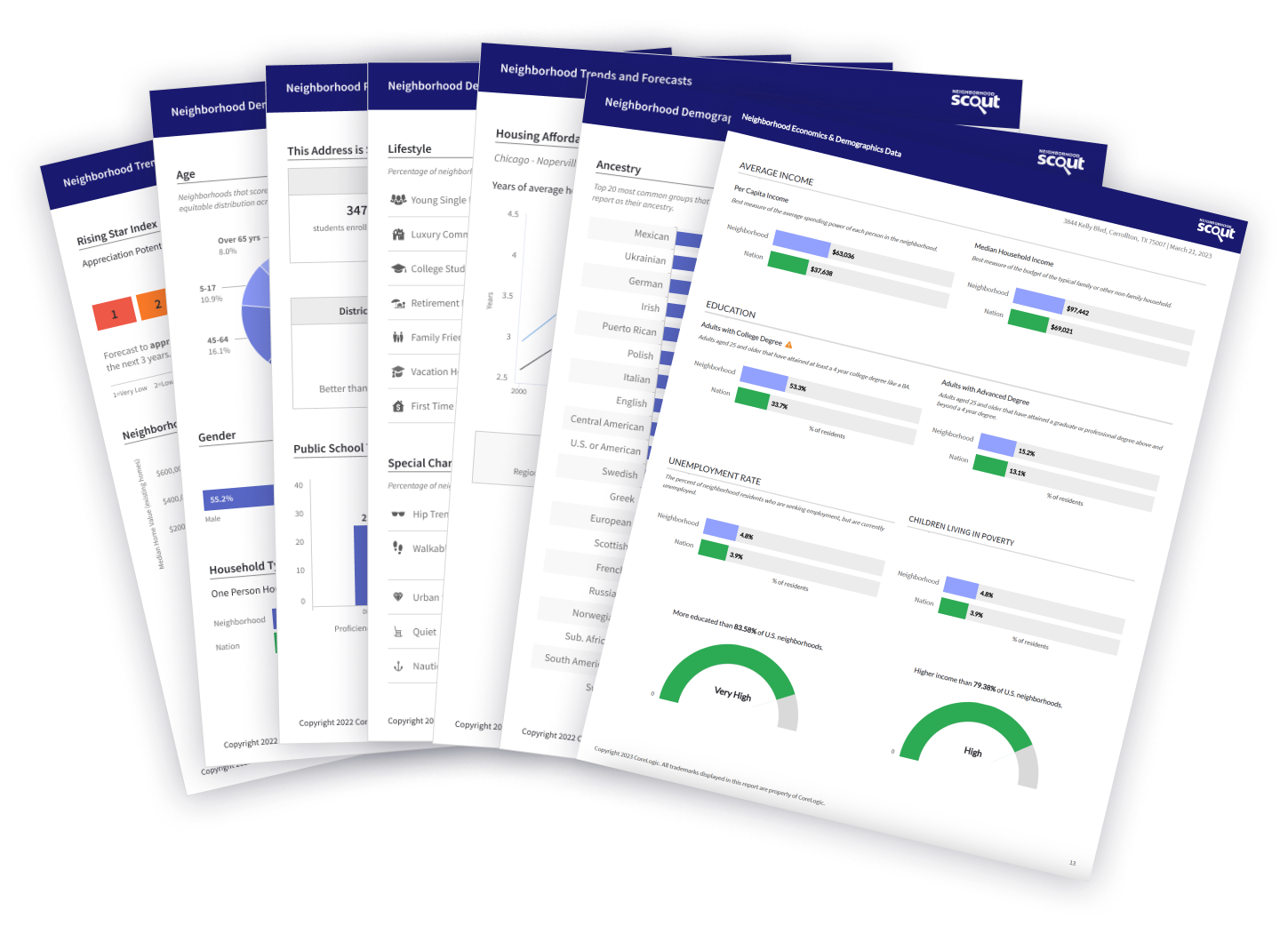
Real Estate includes:
Average Home Values
Rental Market
Housing Market Details
Neighborhood Setting
Economics & Demographics include:
Lifestyle & Special Character
Household Types
Commute To Work
Migration & Mobility
Race & Ethnic Diversity
Employment Industries & Occupations
Income & Unemployment Rate
Higher Education Attainment
Crime includes:
Neighborhood Crime Index
Crimes Per Square Mile
Property Crime Comparison
Violent Crime Comparison
Schools include:
School Ratings
Schools In District
Public School Test Scores
School District Enrollment
Educational Expenditures

comparable neighborhoods nearby