Rindge is a somewhat small town located in the state of New Hampshire. With a population of 6,543 people and just one neighborhood, Rindge is the 52nd largest community in New Hampshire.
Housing costs in Rindge are among some of the highest in the nation, although real estate prices here don't compare to real estate prices in the most expensive communities in New Hampshire.
Unlike some towns where white-collar or blue-collar occupations dominate the local economy, Rindge is neither predominantly one nor the other. Instead, it has a mixed workforce of both white- and blue-collar jobs. Overall, Rindge is a town of managers, professionals, and sales and office workers. There are especially a lot of people living in Rindge who work in management occupations (18.31%), office and administrative support (11.93%), and healthcare (7.02%).
A relatively large number of people in Rindge telecommute to their jobs. Overall, about 18.13% of the workforce works from home. While this may seem like a small number, as a fraction of the total workforce it ranks among the highest in the country. These workers are often telecommuters who work in knowledge-based, white-collar professions. For example, Silicon Valley has large numbers of people who telecommute. Other at-home workers may be self-employed people who operate small businesses out of their homes.
The education level of Rindge citizens is substantially higher than the typical US community, as 31.84% of adults in Rindge have at least a bachelor's degree.
The per capita income in Rindge in 2022 was $37,225, which is low income relative to New Hampshire, and middle income relative to the rest of the US. This equates to an annual income of $148,900 for a family of four. However, Rindge contains both very wealthy and poor people as well.
Rindge is a somewhat ethnically-diverse town. The people who call Rindge home describe themselves as belonging to a variety of racial and ethnic groups. The greatest number of Rindge residents report their race to be White, followed by Asian. Important ancestries of people in Rindge include French, Finnish, Irish, English, and Italian.
The most common language spoken in Rindge is English. Other important languages spoken here include French and Spanish.
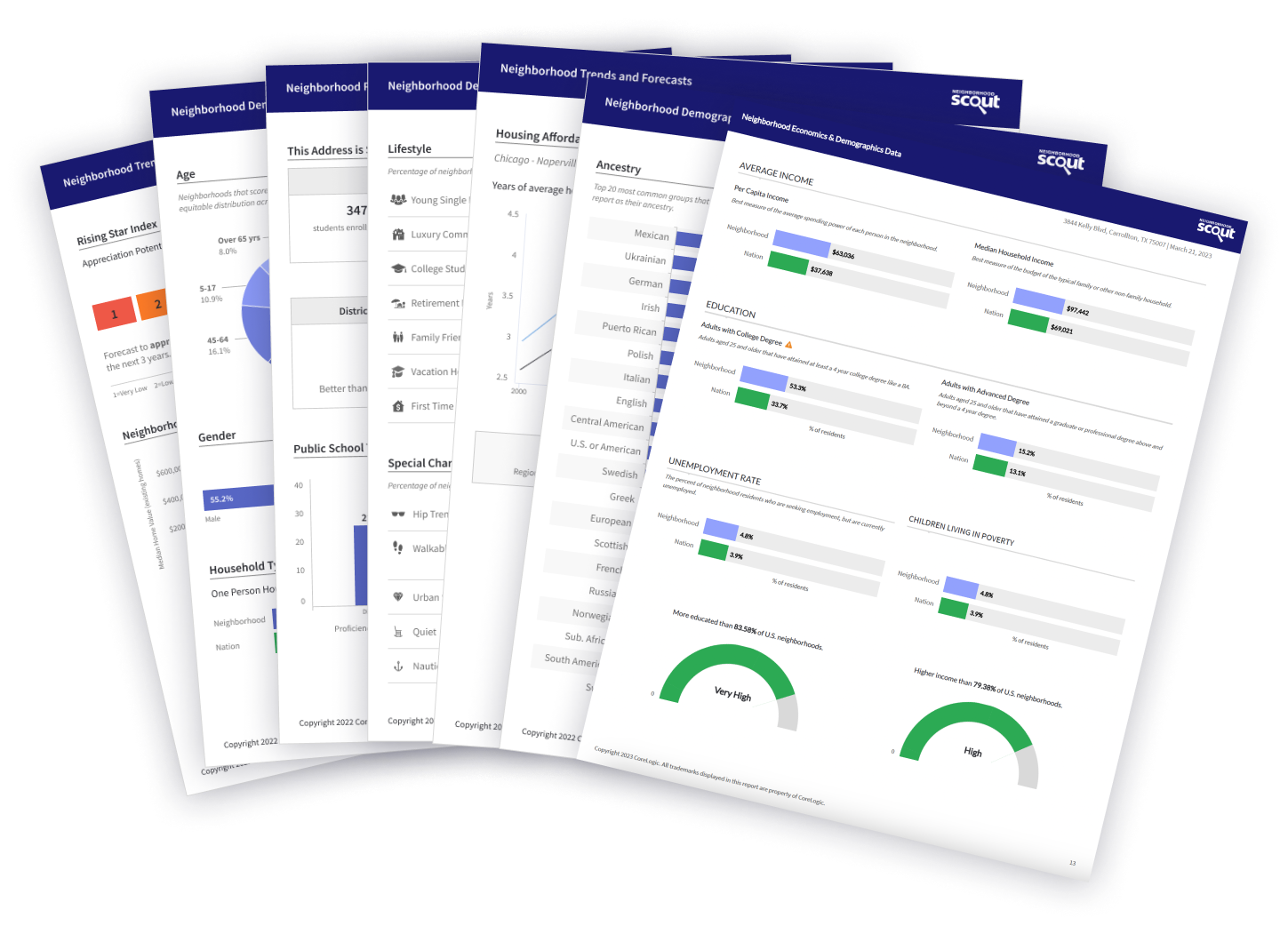
The way a neighborhood looks and feels when you walk or drive around it, from its setting, its buildings, and its flavor, can make all the difference. This neighborhood has some really cool things about the way it looks and feels as revealed by NeighborhoodScout's exclusive research. This might include anything from the housing stock to the types of households living here to how people get around.
NeighborhoodScout's analysis shows that the neighborhood has a greater concentration of residents currently enrolled in college than 97.5% of the neighborhoods in the U.S. With 17.2% of the population here attending college, this is very much a college-focused neighborhood.
In addition, with a nice mix of college students, safety from crime, and decent walkability, the neighborhood rates highly as a college student friendly place to live, and one that college students and their parents may want to consider. NeighborhoodScout's analysis shows that it rates more highly for a good place for college students to live than 86.8% of the neighborhoods in NH. This often also means that the area has certain amenities and services geared towards college students, from undergraduates to graduate students.
Did you know that the neighborhood has more Finnish and Ukrainian ancestry people living in it than nearly any neighborhood in America? It's true! In fact, 13.9% of this neighborhood's residents have Finnish ancestry and 5.3% have Ukrainian ancestry.
How wealthy a neighborhood is, from very wealthy, to middle income, to low income is very formative with regard to the personality and character of a neighborhood. Equally important is the rate of people, particularly children, who live below the federal poverty line. In some wealthy gated communities, the areas immediately surrounding can have high rates of childhood poverty, which indicates other social issues. NeighborhoodScout's analysis reveals both aspects of income and poverty for this neighborhood.
The neighbors in the neighborhood in Rindge are upper-middle income, making it an above average income neighborhood. NeighborhoodScout's exclusive analysis reveals that this neighborhood has a higher income than 73.4% of the neighborhoods in America. With 15.9% of the children here below the federal poverty line, this neighborhood has a higher rate of childhood poverty than 63.2% of U.S. neighborhoods.
The old saying "you are what you eat" is true. But it is also true that you are what you do for a living. The types of occupations your neighbors have shape their character, and together as a group, their collective occupations shape the culture of a place.
In the neighborhood, 44.6% of the working population is employed in executive, management, and professional occupations. The second most important occupational group in this neighborhood is manufacturing and laborer occupations, with 19.4% of the residents employed. Other residents here are employed in clerical, assistant, and tech support occupations (18.2%), and 17.6% in sales and service jobs, from major sales accounts, to working in fast food restaurants.
The most common language spoken in the neighborhood is English, spoken by 95.8% of households.
Boston's Beacon Hill blue-blood streets, Brooklyn's Orthodox Jewish enclaves, Los Angeles' Persian neighborhoods. Each has its own culture derived primarily from the ancestries and culture of the residents who call these neighborhoods home. Likewise, each neighborhood in America has its own culture – some more unique than others – based on lifestyle, occupations, the types of households – and importantly – on the ethnicities and ancestries of the people who live in the neighborhood. Understanding where people came from, who their grandparents or great-grandparents were, can help you understand how a neighborhood is today.
In the neighborhood in Rindge, NH, residents most commonly identify their ethnicity or ancestry as French (14.9%). There are also a number of people of Finnish ancestry (13.9%), and residents who report Irish roots (12.4%), and some of the residents are also of English ancestry (11.8%), along with some Italian ancestry residents (10.0%), among others.
Even if your neighborhood is walkable, you may still have to drive to your place of work. Some neighborhoods are located where many can get to work in just a few minutes, while others are located such that most residents have a long and arduous commute. The greatest number of commuters in neighborhood spend under 15 minutes commuting one-way to work (34.5% of working residents), one of the shortest commutes across America.
Here most residents (69.9%) drive alone in a private automobile to get to work. In a neighborhood like this, as in most of the nation, many residents find owning a car useful for getting to work.