Springfield Belmont Southwest median real estate price is $444,197, which is less expensive than 75.5% of New Jersey neighborhoods and 40.8% of all U.S. neighborhoods.
The average rental price in Springfield Belmont Southwest is currently $1,304, based on NeighborhoodScout's exclusive analysis. Rents here are currently lower in price than 98.9% of New Jersey neighborhoods.
Springfield Belmont Southwest is a densely urban neighborhood (based on population density) located in Newark, New Jersey.
Springfield Belmont Southwest real estate is primarily made up of small (studio to two bedroom) to medium sized (three or four bedroom) apartment complexes/high-rise apartments and small apartment buildings. Most of the residential real estate is renter occupied. Many of the residences in the Springfield Belmont Southwest neighborhood are established but not old, having been built between 1970 and 1999. A number of residences were also built between 2000 and the present.
Home and apartment vacancy rates are 8.1% in Springfield Belmont Southwest. NeighborhoodScout analysis shows that this rate is lower than 45.0% of the neighborhoods in the nation, approximately near the middle range for vacancies.
Many things matter about a neighborhood, but the first thing most people notice is the way a neighborhood looks and its particular character. For example, one might notice whether the buildings all date from a certain time period or whether shop signs are in multiple languages. This particular neighborhood in Newark, the Springfield Belmont Southwest neighborhood, has some outstanding things about the way it looks and its way of life that are worth highlighting.
Our research revealed that more commuters here take the bus to work (32.0% ride the bus) than 99.8% of all American neighborhoods. If you like the idea of leaving your car and home and hopping the bus to work, this might be a good neighborhood for you to consider.
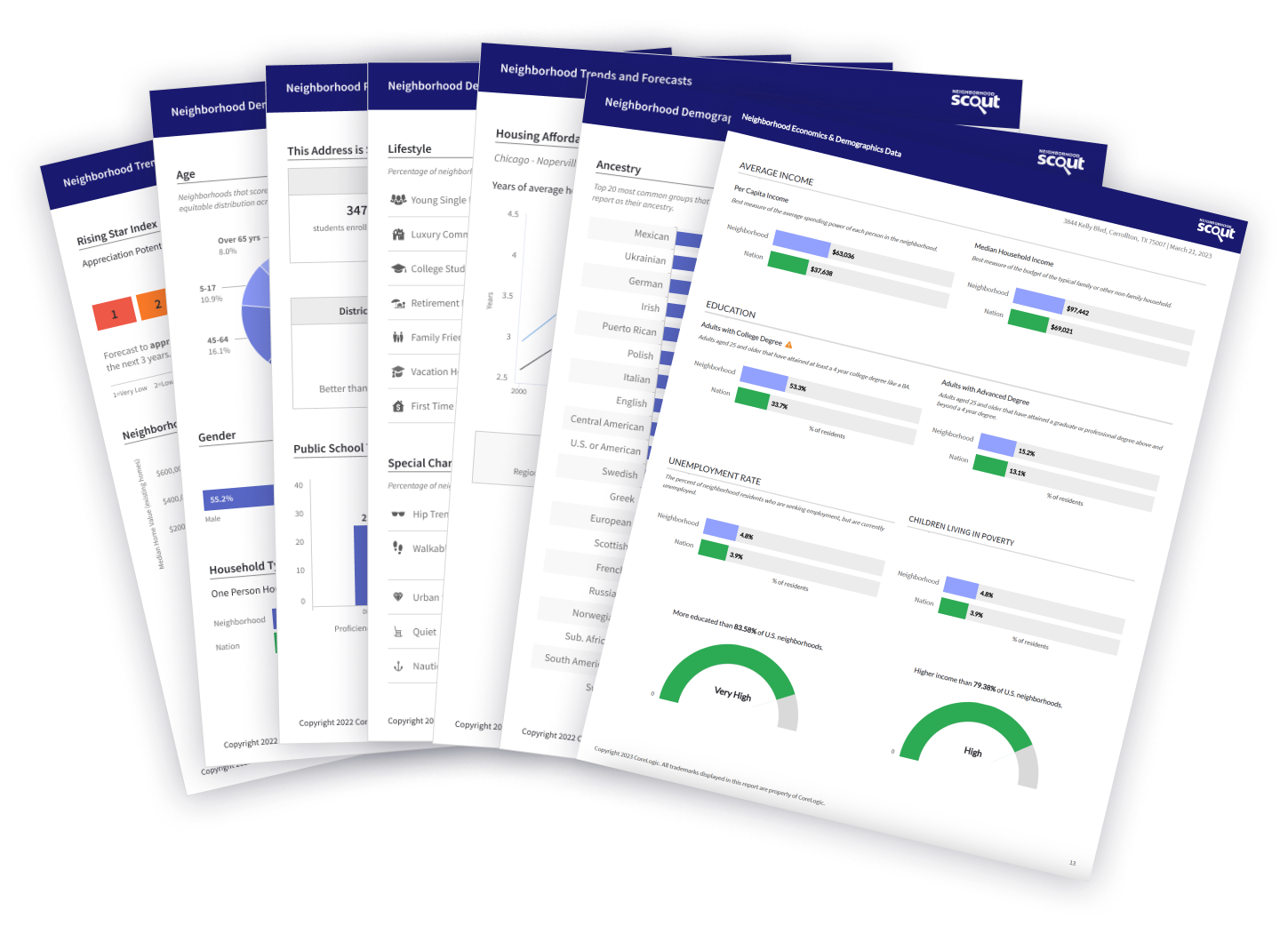
The Springfield Belmont Southwest neighborhood stands out for having an average per capita income lower than 98.8% of the neighborhoods in the United States. The Springfield Belmont Southwest neighborhood also has a greater percentage of children living in poverty (66.3%) than found in 98.1% of all U.S. neighborhoods. Children living in poverty is one of the challenges facing America, and the world, and in this neighborhood in particular, the problem can be considered acute.
In addition, the types of households in a neighborhood can tell a lot about the character and lifestyle of those living here. NeighborhoodScout's exclusive analysis reveals that this neighborhood, above nearly every neighborhood in America, has a greater percentage of its residents living alone: 56.6%. This is a higher percent living alone than we found in 97.9% of all U.S. neighborhoods. Often residents who live alone are new arrivals to an area who are single, and often senior citizens who have lost a spouse.
Also, neighborhoodScout's exclusive research revealed that 93.2% of the adult residents in the Springfield Belmont Southwest neighborhood do not have a 4-year college degree, which is a lower rate of college graduated adults than found in 96.1% of the neighborhoods in America.
Renter-occupied real estate is dominant in the Springfield Belmont Southwest neighborhood. The percentage of rental real estate here, according to exclusive NeighborhoodScout analysis, is 97.4%, which is higher than 98.5% of the neighborhoods in America. If you were to buy and live in the property you bought here, you would be almost alone in doing so.
In addition, three-deckers, duplexes, old Victorian homes cut up into apartments. Independent stores on the corner selling pizza. These are some of the hallmarks of neighborhoods with lots of small 2, 3, and 4 unit apartment buildings. The Springfield Belmont Southwest neighborhood really stands out in this regard, however, as it is dominated by such small apartment buildings more than nearly any other neighborhood in America. This is a stunning visual and lifestyle example of this type of neighborhood. In fact, 32.8% of the real estate here are small 2, 3, or 4 unit apartment buildings, which is a higher proportion than found in 95.6% of America's neighborhoods.
Furthermore, the Springfield Belmont Southwest neighborhood is very unique in that it has one of the highest proportions of one, two, or no bedroom real estate of any neighborhood in America. Most neighborhoods have a mixture of home or apartment sizes from small to large, but here the concentration of studios and other small living spaces is at near-record heights. With 81.9% of the real estate here of this small size, this most assuredly is a notable feature that makes this neighborhood unique, along with just a handful of other neighborhoods in the U.S. that share this characteristic.
Most American households own a car or other vehicle. Many own two cars or perhaps three. In the United States, it is useful to have an automobile not only for commuting, but also for shopping and getting to other services one needs. But NeighborhoodScout's analysis revealed that households in the Springfield Belmont Southwest neighborhood have a highly unusual car ownership. 29.6% of the households in this neighborhood don't own a car at all. This is more carless households than NeighborhoodScout found in 97.0% of U.S. neighborhoods.
Did you know that the Springfield Belmont Southwest neighborhood has more Haitian and African ancestry people living in it than nearly any neighborhood in America? It's true! In fact, 14.5% of this neighborhood's residents have Haitian ancestry and 10.5% have African ancestry.
The freedom of moving to new places versus the comfort of home. How much and how often people move not only can create diverse and worldly neighborhoods, but simultaneously it can produce a loss of intimacy with one's surroundings and a lack of connectedness to one's neighbors. NeighborhoodScout's exclusive research has identified this neighborhood as unique with regard to the transience of its populace. More residents of the Springfield Belmont Southwest neighborhood live here today that also were living in this same neighborhood five years ago than is found in 97.0% of U.S. neighborhoods. This neighborhood is really made up of people who know each other, don't move often, and have lived here in this very neighborhood for quite a while.
There are two complementary measures for understanding the income of a neighborhood's residents: the average and the extremes. While a neighborhood may be relatively wealthy overall, it is equally important to understand the rate of people - particularly children - who are living at or below the federal poverty line, which is extremely low income. Some neighborhoods with a lower average income may actually have a lower childhood poverty rate than another with a higher average income, and this helps us understand the conditions and character of a neighborhood.
The neighbors in the Springfield Belmont Southwest neighborhood in Newark are low income, making it among the lowest income neighborhoods in America. NeighborhoodScout's research shows that this neighborhood has an income lower than 98.8% of U.S. neighborhoods. With 66.3% of the children here below the federal poverty line, this neighborhood has a higher rate of childhood poverty than 98.1% of U.S. neighborhoods.
The old saying "you are what you eat" is true. But it is also true that you are what you do for a living. The types of occupations your neighbors have shape their character, and together as a group, their collective occupations shape the culture of a place.
In the Springfield Belmont Southwest neighborhood, 34.3% of the working population is employed in sales and service jobs, from major sales accounts, to working in fast food restaurants. The second most important occupational group in this neighborhood is executive, management, and professional occupations, with 32.5% of the residents employed. Other residents here are employed in manufacturing and laborer occupations (17.8%), and 15.4% in clerical, assistant, and tech support occupations.
Languages
The most common language spoken in the Springfield Belmont Southwest neighborhood is English, spoken by 93.4% of households. Some people also speak Spanish (4.5%).
Ethnicity / Ancestry
Culture is the shared learned behavior of peoples. Undeniably, different ethnicities and ancestries have different cultural traditions, and as a result, neighborhoods with concentrations of residents of one or another ethnicities or ancestries will express those cultures. It is what makes the North End in Boston so fun to visit for the Italian restaurants, bakeries, culture, and charm, and similarly, why people enjoy visiting Chinatown in San Francisco.
In the Springfield Belmont Southwest neighborhood in Newark, NJ, residents most commonly identify their ethnicity or ancestry as Sub-Saharan African (14.5%). There are also a number of people of Haitian ancestry (14.5%), and residents who report African roots (10.5%), and some of the residents are also of Jamaican ancestry (5.8%), along with some Mexican ancestry residents (3.4%), among others.
Even if your neighborhood is walkable, you may still have to drive to your place of work. Some neighborhoods are located where many can get to work in just a few minutes, while others are located such that most residents have a long and arduous commute. The greatest number of commuters in Springfield Belmont Southwest neighborhood spend between 15 and 30 minutes commuting one-way to work (59.8% of working residents), which is shorter than the time spent commuting to work for most Americans.
Here most residents (52.4%) drive alone in a private automobile to get to work. In addition, quite a number also ride the bus to get to work (32.0%) and 6.2% of residents also take the train for their daily commute. In a neighborhood like this, as in most of the nation, many residents find owning a car useful for getting to work.