menu


Real Estate Prices & Overview

Midwood West median real estate price is $482,335, which is less expensive than 63.3% of New York neighborhoods and 46.4% of all U.S. neighborhoods.

The average rental price in Midwood West is currently $3,538, based on NeighborhoodScout's exclusive analysis. The average rental cost in this neighborhood is higher than 60.4% of the neighborhoods in New York.

Midwood West is a densely urban neighborhood (based on population density) located in Brooklyn, New York.

Midwood West real estate is primarily made up of small (studio to two bedroom) to medium sized (three or four bedroom) apartment complexes/high-rise apartments and small apartment buildings. Most of the residential real estate is occupied by a mixture of owners and renters. Many of the residences in the Midwood West neighborhood are older, well-established, built between 1940 and 1969. A number of residences were also built before 1940.

Midwood West has a 13.2% vacancy rate, which is well above average compared to other U.S. neighborhoods (higher than 75.3% of American neighborhoods). Most vacant housing here is vacant year round. This could either signal that there is a weak demand for real estate in the neighborhood or that large amount of new housing has been built and not yet occupied. Either way, if you live here, you may find many of the homes or apartments are empty.

Notable & Unique Neighborhood Characteristics

Many things matter about a neighborhood, but the first thing most people notice is the way a neighborhood looks and its particular character. For example, one might notice whether the buildings all date from a certain time period or whether shop signs are in multiple languages. This particular neighborhood in Brooklyn, the Midwood West neighborhood, has some outstanding things about the way it looks and its way of life that are worth highlighting.

People

In a nation where 1 out of every 4 children lives in poverty, the Midwood West neighborhood stands out as being ranked among the lowest 0.0% of neighborhoods affected by this global issue.

Modes of Transportation

If you like to ride the train to work, this neighborhood may be for you. NeighborhoodScout's research revealed that 29.5% of the Midwood West neighborhood's commuters ride the train to and from work each day, which is more than we found in 98.4% of America's neighborhoods.

Also, more people in Midwood West choose to walk to work each day (12.9%) than almost any neighborhood in America. If you are attracted to the idea of being able to walk to work, this neighborhood could be a good choice.

Real Estate

If you like crowded places, then you will probably enjoy the the Midwood West neighborhood. According to NeighborhoodScout's exclusive data analysis, this neighborhood is more densely populated than 95.5% of neighborhoods in the U.S., with 22,666 people per square mile living here. Even if you drive or take transit to your place of employment, many people enjoy being able to walk in their neighborhood. What many people don't realize is that most of America's premier vacation locations are also very walkable. The Midwood West neighborhood is among the top 5% of American neighborhoods in terms of walkability.

In addition, the Midwood West neighborhood is very unique in that it has one of the highest proportions of one, two, or no bedroom real estate of any neighborhood in America. Most neighborhoods have a mixture of home or apartment sizes from small to large, but here the concentration of studios and other small living spaces is at near-record heights. With 82.3% of the real estate here of this small size, this most assuredly is a notable feature that makes this neighborhood unique, along with just a handful of other neighborhoods in the U.S. that share this characteristic.

Car Ownership

We Americans love our cars. Not only are they a necessity for most Americans due to the shape of our neighborhoods and the distances between where we live, work, shop, and go to school, but we also fancy them. As a result, most households in America have one, two, or three cars. But NeighborhoodScout's exclusive analysis shows that the Midwood West neighborhood has a highly unusual pattern of car ownership. 19.7% of the households in this neighborhood don't own a car at all. This is more carless households than NeighborhoodScout found in 95.1% of U.S. neighborhoods.

Diversity

Did you know that the Midwood West neighborhood has more Russian and Austrian ancestry people living in it than nearly any neighborhood in America? It's true! In fact, 5.7% of this neighborhood's residents have Russian ancestry and 1.3% have Austrian ancestry.

Midwood West is also pretty special linguistically. Significantly, 2.6% of its residents five years old and above primarily speak Persian at home. While this may seem like a small percentage, it is higher than 99.4% of the neighborhoods in America.

The Neighbors

There are two complementary measures for understanding the income of a neighborhood's residents: the average and the extremes. While a neighborhood may be relatively wealthy overall, it is equally important to understand the rate of people - particularly children - who are living at or below the federal poverty line, which is extremely low income. Some neighborhoods with a lower average income may actually have a lower childhood poverty rate than another with a higher average income, and this helps us understand the conditions and character of a neighborhood.

The neighbors in the Midwood West neighborhood in Brooklyn are upper-middle income, making it an above average income neighborhood. NeighborhoodScout's exclusive analysis reveals that this neighborhood has a higher income than 68.9% of the neighborhoods in America. In addition, 0.0% of the children seventeen and under living in this neighborhood are living below the federal poverty line, which is a lower rate of childhood poverty than is found in 100.0% of America's neighborhoods.

The old saying "you are what you eat" is true. But it is also true that you are what you do for a living. The types of occupations your neighbors have shape their character, and together as a group, their collective occupations shape the culture of a place.

In the Midwood West neighborhood, 48.5% of the working population is employed in executive, management, and professional occupations. The second most important occupational group in this neighborhood is sales and service jobs, from major sales accounts, to working in fast food restaurants, with 19.8% of the residents employed. Other residents here are employed in clerical, assistant, and tech support occupations (19.1%), and 12.6% in manufacturing and laborer occupations.

Languages

The languages spoken by people in this neighborhood are diverse. These are tabulated as the languages people preferentially speak when they are at home with their families. The most common language spoken in the Midwood West neighborhood is English, spoken by 66.2% of households. Other important languages spoken here include Spanish, German/Yiddish, African languages and Persian.

Ethnicity / Ancestry

Boston's Beacon Hill blue-blood streets, Brooklyn's Orthodox Jewish enclaves, Los Angeles' Persian neighborhoods. Each has its own culture derived primarily from the ancestries and culture of the residents who call these neighborhoods home. Likewise, each neighborhood in America has its own culture – some more unique than others – based on lifestyle, occupations, the types of households – and importantly – on the ethnicities and ancestries of the people who live in the neighborhood. Understanding where people came from, who their grandparents or great-grandparents were, can help you understand how a neighborhood is today.

In the Midwood West neighborhood in Brooklyn, NY, residents most commonly identify their ethnicity or ancestry as Polish (8.0%). There are also a number of people of Asian ancestry (7.1%), and residents who report Russian roots (5.7%), and some of the residents are also of Puerto Rican ancestry (2.9%), along with some Italian ancestry residents (2.6%), among others. In addition, 30.1% of the residents of this neighborhood were born in another country.

Getting to Work

How you get to work – car, bus, train or other means – and how much of your day it takes to do so is a large quality of life and financial issue. Especially with gasoline prices rising and expected to continue doing so, the length and means of one's commute can be a financial burden. Some neighborhoods are physically located so that many residents have to drive in their own car, others are set up so many walk to work, or can take a train, bus, or bike. The greatest number of commuters in Midwood West neighborhood spend between 45 minutes and one hour commuting one-way to work (47.6% of working residents), longer and tougher than most commutes in America.

Here most residents (29.5%) take the train to get to work. In addition, quite a number also hop out the door and walk to work to get to work (12.9%) and 12.2% of residents also drive alone in a private automobile for their daily commute. This neighborhood is distinguished by the high number of residents who take the train to work each day, which can be a very good way to get to work at a lower cost and with less pollution.


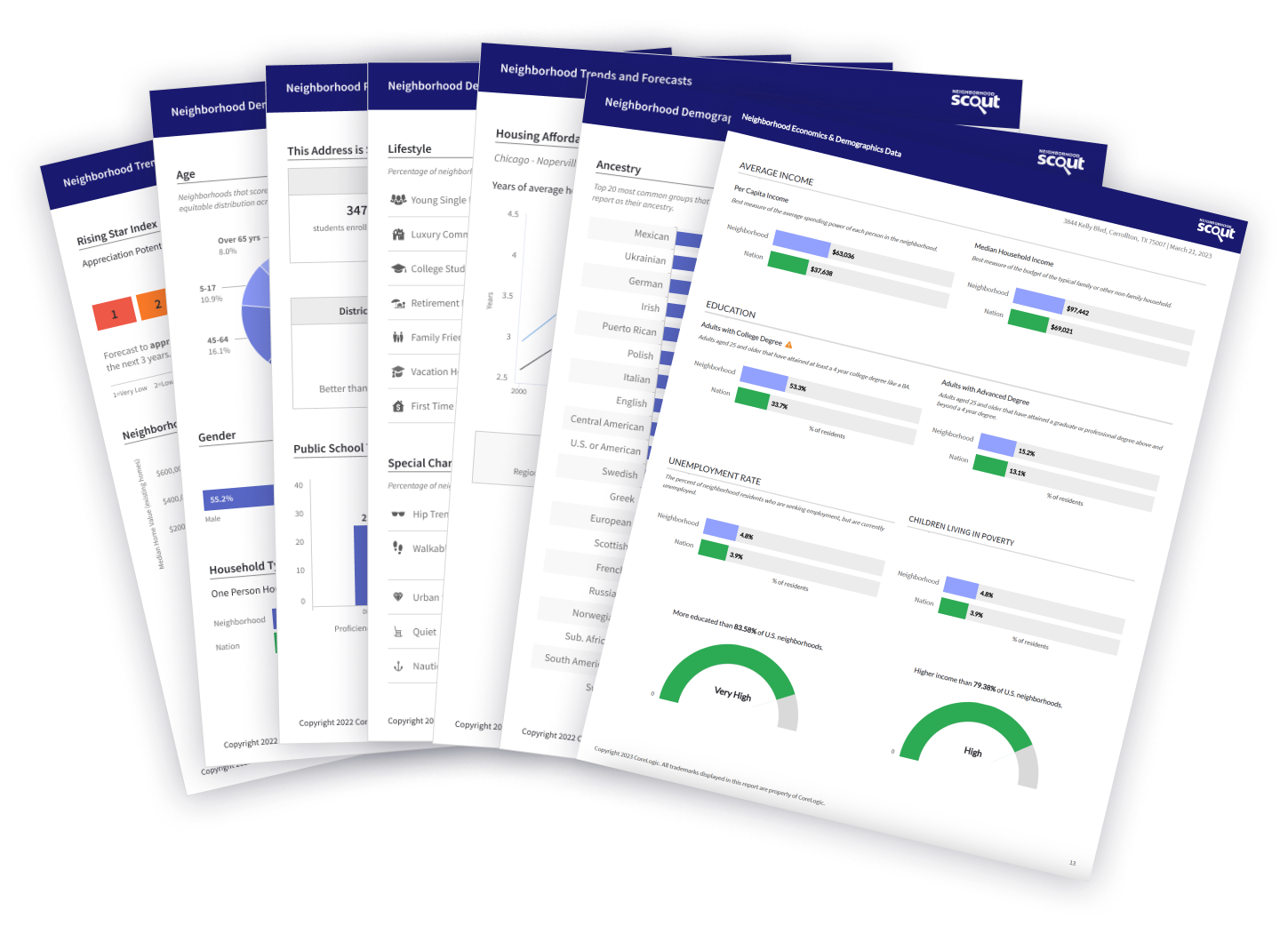
Real Estate includes:
Average Home Values
Rental Market
Housing Market Details
Neighborhood Setting
Economics & Demographics include:
Lifestyle & Special Character
Household Types
Commute To Work
Migration & Mobility
Race & Ethnic Diversity
Employment Industries & Occupations
Income & Unemployment Rate
Higher Education Attainment
Crime includes:
Neighborhood Crime Index
Crimes Per Square Mile
Property Crime Comparison
Violent Crime Comparison
Schools include:
School Ratings
Schools In District
Public School Test Scores
School District Enrollment
Educational Expenditures

comparable neighborhoods nearby