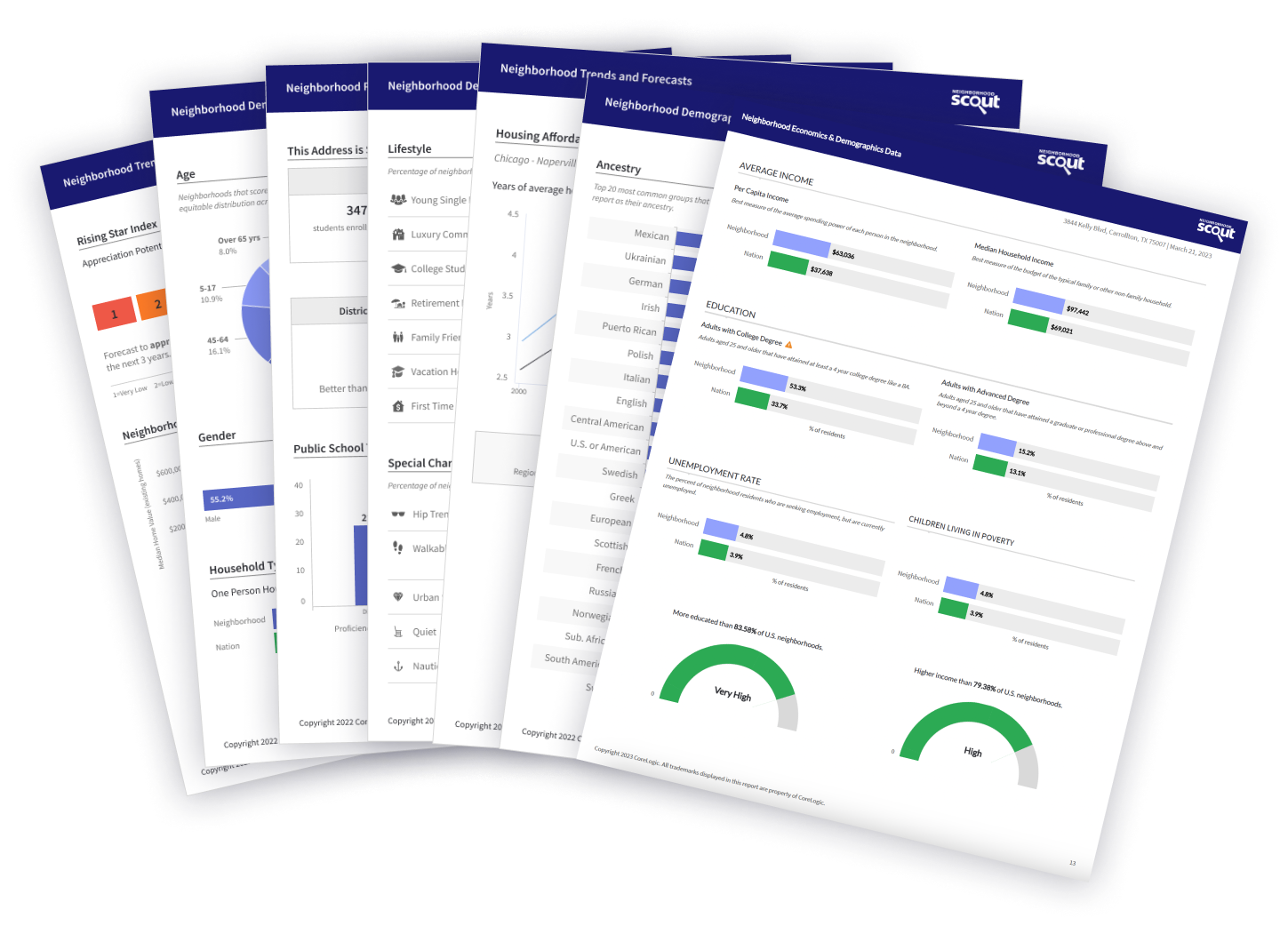
Roosevelt East median real estate price is $663,449, which is more expensive than 49.5% of the neighborhoods in New York and 77.5% of the neighborhoods in the U.S.
The average rental price in Roosevelt East is currently $3,948, based on NeighborhoodScout's exclusive analysis. The average rental cost in this neighborhood is higher than 68.7% of the neighborhoods in New York.
Roosevelt East is an urban neighborhood (based on population density) located in Roosevelt, New York.
Roosevelt East real estate is primarily made up of medium sized (three or four bedroom) to large (four, five or more bedroom) single-family homes and small apartment buildings. Most of the residential real estate is owner occupied. Many of the residences in the Roosevelt East neighborhood are older, well-established, built between 1940 and 1969. A number of residences were also built between 1970 and 1999.
In Roosevelt East, the current vacancy rate is 0.0%, which is a lower rate of vacancies than 100.0% of all neighborhoods in the U.S. This means that the housing supply in Roosevelt East is very tight compared to the demand for property here.
When you see a neighborhood for the first time, the most important thing is often the way it looks, like its homes and its setting. Some places look the same, but they only reveal their true character after living in them for a while because they contain a unique mix of occupational or cultural groups. This neighborhood is very unique in some important ways, according to NeighborhoodScout's exclusive exploration and analysis.
With a real estate vacancy rate of only 0.0%, the Roosevelt East neighborhood has a lower vacancy rate than 100.0% of U.S. neighborhoods, a very elite group. Such a low vacancy rate may indicate very strong real estate demand in the neighborhood combined with some impediments to increasing supply, such as zoning or existing density of development, among other potential reasons.
In a nation where 1 out of every 4 children lives in poverty, the Roosevelt East neighborhood stands out as being ranked among the lowest 0.0% of neighborhoods affected by this global issue.
American households most often have a car, and regularly they have two or three. But households in the Roosevelt East neighborhood buck this trend. Residents of this neighborhood must really love automobiles. NeighborhoodScout's Analysis reveals that 35.6% of the households here have four, five, or more cars. That is more cars per household than in 96.4% of the neighborhoods in the nation.
If you like to ride the train to work, this neighborhood may be for you. NeighborhoodScout's research revealed that 10.7% of the Roosevelt East neighborhood's commuters ride the train to and from work each day, which is more than we found in 95.9% of America's neighborhoods.
Did you know that the Roosevelt East neighborhood has more Jamaican and Haitian ancestry people living in it than nearly any neighborhood in America? It's true! In fact, 11.9% of this neighborhood's residents have Jamaican ancestry and 5.0% have Haitian ancestry.
Roosevelt East is also pretty special linguistically. Significantly, 5.0% of its residents five years old and above primarily speak French at home. While this may seem like a small percentage, it is higher than 97.4% of the neighborhoods in America.
The freedom of moving to new places versus the comfort of home. How much and how often people move not only can create diverse and worldly neighborhoods, but simultaneously it can produce a loss of intimacy with one's surroundings and a lack of connectedness to one's neighbors. NeighborhoodScout's exclusive research has identified this neighborhood as unique with regard to the transience of its populace. More residents of the Roosevelt East neighborhood live here today that also were living in this same neighborhood five years ago than is found in 95.5% of U.S. neighborhoods. This neighborhood is really made up of people who know each other, don't move often, and have lived here in this very neighborhood for quite a while. What is interesting to note, is that the Roosevelt East neighborhood has a greater percentage of residents born in another country (49.5%) than are found in 97.3% of all U.S. neighborhoods.
How wealthy a neighborhood is, from very wealthy, to middle income, to low income is very formative with regard to the personality and character of a neighborhood. Equally important is the rate of people, particularly children, who live below the federal poverty line. In some wealthy gated communities, the areas immediately surrounding can have high rates of childhood poverty, which indicates other social issues. NeighborhoodScout's analysis reveals both aspects of income and poverty for this neighborhood.
The neighbors in the Roosevelt East neighborhood in Roosevelt are wealthy, making it among the 15% highest income neighborhoods in America. NeighborhoodScout's exclusive analysis reveals that this neighborhood has a higher income than 90.6% of the neighborhoods in America. In addition, 0.0% of the children seventeen and under living in this neighborhood are living below the federal poverty line, which is a lower rate of childhood poverty than is found in 100.0% of America's neighborhoods.
The old saying "you are what you eat" is true. But it is also true that you are what you do for a living. The types of occupations your neighbors have shape their character, and together as a group, their collective occupations shape the culture of a place.
In the Roosevelt East neighborhood, 26.8% of the working population is employed in sales and service jobs, from major sales accounts, to working in fast food restaurants. The second most important occupational group in this neighborhood is executive, management, and professional occupations, with 25.8% of the residents employed. Other residents here are employed in manufacturing and laborer occupations (25.4%), and 20.4% in clerical, assistant, and tech support occupations.
The languages spoken by people in this neighborhood are diverse. These are tabulated as the languages people preferentially speak when they are at home with their families. The most common language spoken in the Roosevelt East neighborhood is English, spoken by 49.7% of households. Other important languages spoken here include Spanish and French.
Boston's Beacon Hill blue-blood streets, Brooklyn's Orthodox Jewish enclaves, Los Angeles' Persian neighborhoods. Each has its own culture derived primarily from the ancestries and culture of the residents who call these neighborhoods home. Likewise, each neighborhood in America has its own culture – some more unique than others – based on lifestyle, occupations, the types of households – and importantly – on the ethnicities and ancestries of the people who live in the neighborhood. Understanding where people came from, who their grandparents or great-grandparents were, can help you understand how a neighborhood is today.
In the Roosevelt East neighborhood in Roosevelt, NY, residents most commonly identify their ethnicity or ancestry as Jamaican (11.9%). There are also a number of people of Haitian ancestry (5.0%), and residents who report Dominican roots (2.4%), and some of the residents are also of South American ancestry (1.9%), along with some Asian ancestry residents (1.2%), among others. In addition, 49.5% of the residents of this neighborhood were born in another country.
How you get to work – car, bus, train or other means – and how much of your day it takes to do so is a large quality of life and financial issue. Especially with gasoline prices rising and expected to continue doing so, the length and means of one's commute can be a financial burden. Some neighborhoods are physically located so that many residents have to drive in their own car, others are set up so many walk to work, or can take a train, bus, or bike. The greatest number of commuters in Roosevelt East neighborhood spend between 15 and 30 minutes commuting one-way to work (31.6% of working residents), which is shorter than the time spent commuting to work for most Americans.
Here most residents (62.4%) drive alone in a private automobile to get to work. In addition, quite a number also take the train to get to work (10.7%) and 8.8% of residents also ride the bus for their daily commute. In a neighborhood like this, as in most of the nation, many residents find owning a car useful for getting to work.