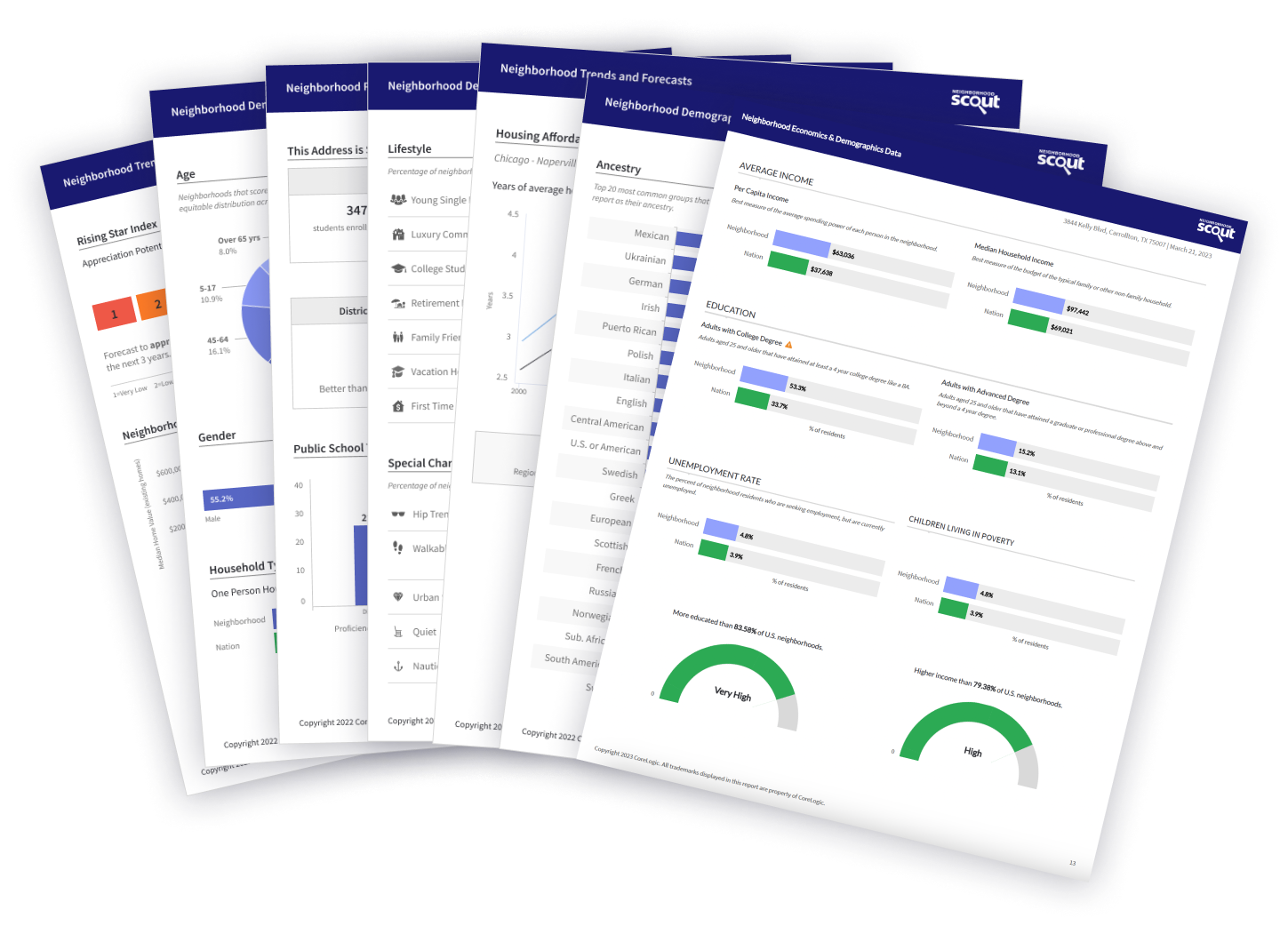
Edgerton is a very small village located in the state of Ohio. With a population of 1,874 people and just one neighborhood, Edgerton is the 473rd largest community in Ohio.
When you are in Edgerton, you'll notice that it is more blue-collar than most other communities in America. 41.34% of Edgerton’s employed work in blue-collar jobs, while America averages only 27.7% that do. Overall, Edgerton is a village of production and manufacturing workers, sales and office workers, and professionals. There are especially a lot of people living in Edgerton who work in office and administrative support (13.98%), teaching (7.48%), and management occupations (6.59%).
In terms of college education, the citizens of Edgerton rank slightly lower than the national average. 13.61% of adults 25 and older in Edgerton have a bachelor's degree or advanced degree, while 21.84% of adults have a 4-year degree or higher in the average American community.
The per capita income in Edgerton in 2022 was $29,313, which is lower middle income relative to Ohio and the nation. This equates to an annual income of $117,252 for a family of four. However, Edgerton contains both very wealthy and poor people as well.
The people who call Edgerton home describe themselves as belonging to a variety of racial and ethnic groups. The greatest number of Edgerton residents report their race to be White, followed by Black or African-American. Important ancestries of people in Edgerton include German, Irish, English, Dutch, and Polish.
The most common language spoken in Edgerton is English. Other important languages spoken here include Polish and Italian.
The way a neighborhood looks and feels when you walk or drive around it, from its setting, its buildings, and its flavor, can make all the difference. This neighborhood has some really cool things about the way it looks and feels as revealed by NeighborhoodScout's exclusive research. This might include anything from the housing stock to the types of households living here to how people get around.
Our research reveals that 89.6% of commuters who live in the neighborhood get to work each day by driving alone in their automobiles, which is a higher proportion than 97.5% of U.S. neighborhoods.
More people work in manufacturing and as laborers here in the neighborhood than in 95.5% of the neighborhoods in America. Despite the loss of manufacturing jobs across the nation, this neighborhood remains a place where, compared to other parts of the country, you will find many laborers and manufacturers.
With a nice mix of college students, safety from crime, and decent walkability, the neighborhood rates highly as a college student friendly place to live, and one that college students and their parents may want to consider. NeighborhoodScout's analysis shows that it rates more highly for a good place for college students to live than 87.5% of the neighborhoods in OH. This often also means that the area has certain amenities and services geared towards college students, from undergraduates to graduate students.
Did you know that the neighborhood has more German ancestry people living in it than nearly any neighborhood in America? It's true! In fact, 42.7% of this neighborhood's residents have German ancestry.
How wealthy a neighborhood is, from very wealthy, to middle income, to low income is very formative with regard to the personality and character of a neighborhood. Equally important is the rate of people, particularly children, who live below the federal poverty line. In some wealthy gated communities, the areas immediately surrounding can have high rates of childhood poverty, which indicates other social issues. NeighborhoodScout's analysis reveals both aspects of income and poverty for this neighborhood.
The neighbors in the neighborhood in Edgerton are low income, making it among the lowest income neighborhoods in America. NeighborhoodScout's research shows that this neighborhood has an income lower than 87.3% of U.S. neighborhoods. With 14.2% of the children here below the federal poverty line, this neighborhood has a higher rate of childhood poverty than 60.0% of U.S. neighborhoods.
A neighborhood is far different if it is dominated by enlisted military personnel rather than people who earn their living by farming. It is also different if most of the neighbors are clerical support or managers. What is wonderful is the sheer diversity of neighborhoods, allowing you to find the type that fits your lifestyle and aspirations.
In the neighborhood, 41.8% of the working population is employed in manufacturing and laborer occupations. The second most important occupational group in this neighborhood is executive, management, and professional occupations, with 27.6% of the residents employed. Other residents here are employed in sales and service jobs, from major sales accounts, to working in fast food restaurants (16.8%), and 13.9% in clerical, assistant, and tech support occupations.
The most common language spoken in the neighborhood is English, spoken by 97.3% of households. Some people also speak Polish (3.6%).
Culture is the shared learned behavior of peoples. Undeniably, different ethnicities and ancestries have different cultural traditions, and as a result, neighborhoods with concentrations of residents of one or another ethnicities or ancestries will express those cultures. It is what makes the North End in Boston so fun to visit for the Italian restaurants, bakeries, culture, and charm, and similarly, why people enjoy visiting Chinatown in San Francisco.
In the neighborhood in Edgerton, OH, residents most commonly identify their ethnicity or ancestry as German (42.7%). There are also a number of people of Irish ancestry (13.8%), and residents who report English roots (11.5%), and some of the residents are also of Puerto Rican ancestry (3.7%), along with some Mexican ancestry residents (3.1%), among others.
How you get to work – car, bus, train or other means – and how much of your day it takes to do so is a large quality of life and financial issue. Especially with gasoline prices rising and expected to continue doing so, the length and means of one's commute can be a financial burden. Some neighborhoods are physically located so that many residents have to drive in their own car, others are set up so many walk to work, or can take a train, bus, or bike. The greatest number of commuters in neighborhood spend between 15 and 30 minutes commuting one-way to work (38.8% of working residents), which is shorter than the time spent commuting to work for most Americans.
Here most residents (89.6%) drive alone in a private automobile to get to work. In a neighborhood like this, as in most of the nation, many residents find owning a car useful for getting to work.