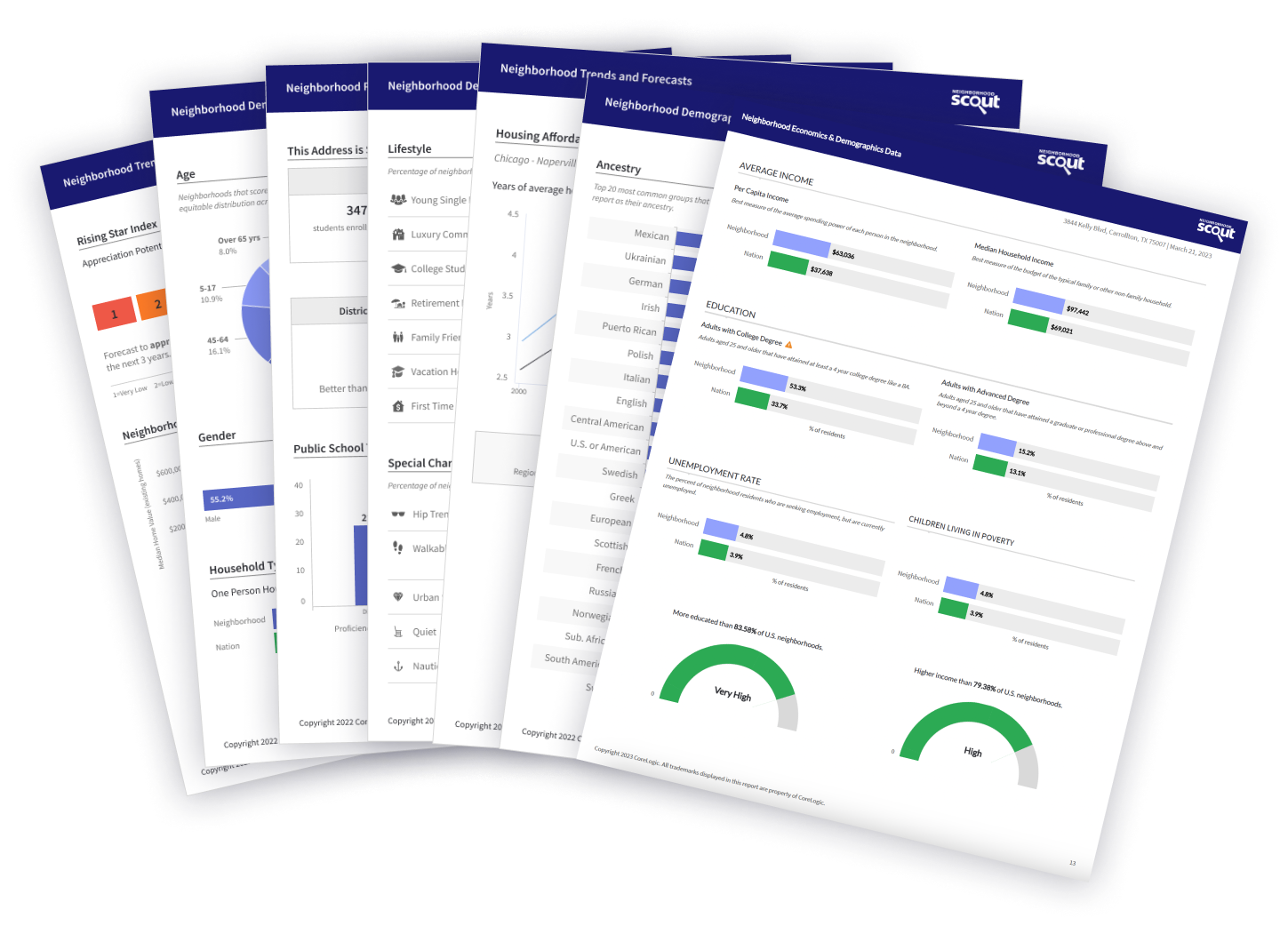
Aumsville is a very small city located in the state of Oregon. With a population of 4,216 people and just one neighborhood, Aumsville is the 99th largest community in Oregon.
Aumsville home prices are not only among the most expensive in Oregon, but Aumsville real estate also consistently ranks among the most expensive in America.
Aumsville is neither predominantly blue-collar nor white-collar, instead having a mixed workforce of both blue-collar and white-collar jobs. Overall, Aumsville is a city of service providers, managers, and professionals. There are especially a lot of people living in Aumsville who work in management occupations (15.30%), food service (7.89%), and sales jobs (6.97%).
Being a small city, Aumsville does not have a public transit system used by locals to get to and from work.
The citizens of Aumsville are slightly less educated than the national average of 21.84% for the average city or town: 14.07% of adults in Aumsville have a bachelor's degree or advanced degree
The per capita income in Aumsville in 2022 was $37,885, which is middle income relative to Oregon and the nation. This equates to an annual income of $151,540 for a family of four. However, Aumsville contains both very wealthy and poor people as well.
Aumsville is a very ethnically-diverse city. The people who call Aumsville home describe themselves as belonging to a variety of racial and ethnic groups. The greatest number of Aumsville residents report their race to be White, followed by Native American. Aumsville also has a sizeable Hispanic population (people of Hispanic origin can be of any race). People of Hispanic or Latino origin account for 16.17% of the city’s residents. Important ancestries of people in Aumsville include German, English, Irish, Norwegian, and Italian.
The most common language spoken in Aumsville is English. Other important languages spoken here include Spanish and Polish.
Many things matter about a neighborhood, but the first thing most people notice is the way a neighborhood looks and its particular character. For example, one might notice whether the buildings all date from a certain time period or whether shop signs are in multiple languages. This particular neighborhood in Aumsville, the neighborhood, has some outstanding things about the way it looks and its way of life that are worth highlighting.
This neighborhood has the distinction of having one of the lowest real estate vacancy rates of any neighborhood in America. With just 0.0% of the real estate vacant, this indicates an exceptionally strong demand for real estate in the neighborhood, and/or an issue with creating enough supply for the demand. This could have the effect of increasing real estate prices, increasing supply to meet demand, or both.
We Americans love our cars. Not only are they a necessity for most Americans due to the shape of our neighborhoods and the distances between where we live, work, shop, and go to school, but we also fancy them. As a result, most households in America have one, two, or three cars. But NeighborhoodScout's exclusive analysis shows that the neighborhood has a highly unusual pattern of car ownership. Residents of this neighborhood must really love automobiles. NeighborhoodScout's Analysis reveals that 52.0% of the households here have four, five, or more cars. That is more cars per household than in 99.8% of the neighborhoods in the nation.
According to NeighborhoodScout's exclusive analysis, is among the best neighborhoods for families in Oregon. In fact, this neighborhood is more family-friendly than 97.0% of neighborhoods in the entire state of Oregon. Its combination of top public schools, low crime rates, and owner-occupied single family homes gives this area the look and feel of a "Leave It to Beaver" episode. Many other families also live here, making it easy to socialize and develop a strong sense of community. In addition, the high number of college-educated parents influences the academic success of the local schools. Overall, you will find all of the amenities a family needs to thrive in the neighborhood.
The government often provides some of the more stable jobs in the economy. From local, to state, to federal government workers, the government can also be a major employer. What NeighborhoodScout's analysis revealed, is that the neighborhood in particular stands out when compared nationally for the proportion of its working residents who are employed by the government. At 14.2% of its workforce, this neighborhood has a greater concentration of government workers than 96.6% of U.S. neighborhoods.
Did you know that the neighborhood has more Native American and Finnish ancestry people living in it than nearly any neighborhood in America? It's true! In fact, 3.0% of this neighborhood's residents have Native American ancestry and 1.0% have Finnish ancestry.
How wealthy a neighborhood is, from very wealthy, to middle income, to low income is very formative with regard to the personality and character of a neighborhood. Equally important is the rate of people, particularly children, who live below the federal poverty line. In some wealthy gated communities, the areas immediately surrounding can have high rates of childhood poverty, which indicates other social issues. NeighborhoodScout's analysis reveals both aspects of income and poverty for this neighborhood.
The neighbors in the neighborhood in Aumsville are upper-middle income, making it an above average income neighborhood. NeighborhoodScout's exclusive analysis reveals that this neighborhood has a higher income than 84.9% of the neighborhoods in America. With 13.4% of the children here below the federal poverty line, this neighborhood has a higher rate of childhood poverty than 58.3% of U.S. neighborhoods.
A neighborhood is far different if it is dominated by enlisted military personnel rather than people who earn their living by farming. It is also different if most of the neighbors are clerical support or managers. What is wonderful is the sheer diversity of neighborhoods, allowing you to find the type that fits your lifestyle and aspirations.
In the neighborhood, 43.5% of the working population is employed in executive, management, and professional occupations. The second most important occupational group in this neighborhood is sales and service jobs, from major sales accounts, to working in fast food restaurants, with 22.2% of the residents employed. Other residents here are employed in manufacturing and laborer occupations (20.4%), and 14.2% in government jobs, whether they are in local, state, or federal positions.
The most common language spoken in the neighborhood is English, spoken by 91.8% of households. Some people also speak Spanish (6.4%).
Boston's Beacon Hill blue-blood streets, Brooklyn's Orthodox Jewish enclaves, Los Angeles' Persian neighborhoods. Each has its own culture derived primarily from the ancestries and culture of the residents who call these neighborhoods home. Likewise, each neighborhood in America has its own culture – some more unique than others – based on lifestyle, occupations, the types of households – and importantly – on the ethnicities and ancestries of the people who live in the neighborhood. Understanding where people came from, who their grandparents or great-grandparents were, can help you understand how a neighborhood is today.
In the neighborhood in Aumsville, OR, residents most commonly identify their ethnicity or ancestry as German (23.3%). There are also a number of people of English ancestry (19.7%), and residents who report Irish roots (15.7%), and some of the residents are also of Mexican ancestry (6.9%), along with some Italian ancestry residents (3.8%), among others.
How you get to work – car, bus, train or other means – and how much of your day it takes to do so is a large quality of life and financial issue. Especially with gasoline prices rising and expected to continue doing so, the length and means of one's commute can be a financial burden. Some neighborhoods are physically located so that many residents have to drive in their own car, others are set up so many walk to work, or can take a train, bus, or bike. The greatest number of commuters in neighborhood spend between 15 and 30 minutes commuting one-way to work (52.5% of working residents), which is shorter than the time spent commuting to work for most Americans.
Here most residents (74.8%) drive alone in a private automobile to get to work. In addition, quite a number also carpool with coworkers, friends, or neighbors to get to work (10.3%) . In a neighborhood like this, as in most of the nation, many residents find owning a car useful for getting to work.