menu


Real Estate Prices & Overview

Fishtown - Lower Kensington median real estate price is $433,034, which is more expensive than 76.0% of the neighborhoods in Pennsylvania and 57.6% of the neighborhoods in the U.S.

The average rental price in Fishtown - Lower Kensington is currently $2,993, based on NeighborhoodScout's exclusive analysis. The average rental cost in this neighborhood is higher than 89.3% of the neighborhoods in Pennsylvania.

Fishtown - Lower Kensington is a densely urban neighborhood (based on population density) located in Philadelphia, Pennsylvania.

Fishtown - Lower Kensington real estate is primarily made up of medium sized (three or four bedroom) to small (studio to two bedroom) townhomes and single-family homes. Most of the residential real estate is occupied by a mixture of owners and renters. Many of the residences in the Fishtown - Lower Kensington neighborhood are relatively historic, built no later than 1939, and in some cases, quite a bit earlier. A number of residences were also built between 1970 and 1999.

Home and apartment vacancy rates are 5.9% in Fishtown - Lower Kensington. NeighborhoodScout analysis shows that this rate is lower than 59.2% of the neighborhoods in the nation, approximately near the middle range for vacancies.

Notable & Unique Neighborhood Characteristics

The way a neighborhood looks and feels when you walk or drive around it, from its setting, its buildings, and its flavor, can make all the difference. This neighborhood has some really cool things about the way it looks and feels as revealed by NeighborhoodScout's exclusive research. This might include anything from the housing stock to the types of households living here to how people get around.

Real Estate

If you love row houses and attached homes, you will probably really like the Fishtown - Lower Kensington neighborhood. The ambiance, the charm, of row houses is something special. And in sheer abundance of row houses, this neighborhood truly stands out. The real estate here has a higher proportion of row houses and attached homes than nearly any neighborhood in America. In fact, 88.6% of the residential real estate here is classified as row houses and attached homes.

In addition, if you like crowded places, then you will probably enjoy the the Fishtown - Lower Kensington neighborhood. According to NeighborhoodScout's exclusive data analysis, this neighborhood is more densely populated than 95.2% of neighborhoods in the U.S., with 21,150 people per square mile living here. Even if you drive or take transit to your place of employment, many people enjoy being able to walk in their neighborhood. What many people don't realize is that most of America's premier vacation locations are also very walkable. The Fishtown - Lower Kensington neighborhood is among the top 5% of American neighborhoods in terms of walkability.

Furthermore, if you find historic homes and neighborhoods attractive, you love the details, the history, and the charm, then you are sure to be interested in this neighborhood. With 78.1% of the residential real estate in the Fishtown - Lower Kensington neighborhood built no later than 1939, and some built considerably earlier, this neighborhood has a greater concentration of historic residences than 99.5% of all neighborhoods in America. In this regard, this neighborhood truly stands out as special.

People

Think about the people you know personally. How many of them would purchase box seats to opening night at the symphony? How many of them regularly attend gallery openings, or are the first to reserve tickets to opening night at the ballet? If they're like most of us, they don't do any of these things. But if you're among an exclusive crowd of wealthy and refined patrons of the arts, then you'll feel right at home in the Fishtown - Lower Kensington neighborhood: a neighborhood in which more "urban sophisticates" live than 99.4% of neighborhoods across the U.S. Here, your neighbors are defined as having urbane tastes in literature, music, live theatre and the arts. They are wealthy, educated, travel in style, and live a big city lifestyle whether or not they live in or near a big city.

Modes of Transportation

More people ride the bus in this neighborhood each day to get to work than 97.7% of U.S. neighborhoods.

Also, in the Fishtown - Lower Kensington neighborhood, 10.7% of people ride the train to work each day. This is a very high percentage compared to most places. In fact, NeighborhoodScout's analysis reveals that this is a higher level of train ridership than in 95.6% of the neighborhoods in America.

Occupations

Executives, managers and professionals make up 74.3% of the workforce in the Fishtown - Lower Kensington neighborhood which, according to NeighborhoodScout's exclusive analysis, is a higher proportion of such high-level people than is found in 97.1% of the neighborhoods in America. For this reason, this neighborhood really stands out as unique.

Diversity

Did you know that the Fishtown - Lower Kensington neighborhood has more Irish and British ancestry people living in it than nearly any neighborhood in America? It's true! In fact, 34.9% of this neighborhood's residents have Irish ancestry and 2.5% have British ancestry.

The Neighbors

There are two complementary measures for understanding the income of a neighborhood's residents: the average and the extremes. While a neighborhood may be relatively wealthy overall, it is equally important to understand the rate of people - particularly children - who are living at or below the federal poverty line, which is extremely low income. Some neighborhoods with a lower average income may actually have a lower childhood poverty rate than another with a higher average income, and this helps us understand the conditions and character of a neighborhood.

The neighbors in the Fishtown - Lower Kensington neighborhood in Philadelphia are upper-middle income, making it an above average income neighborhood. NeighborhoodScout's exclusive analysis reveals that this neighborhood has a higher income than 80.0% of the neighborhoods in America. In addition, 1.3% of the children seventeen and under living in this neighborhood are living below the federal poverty line, which is a lower rate of childhood poverty than is found in 77.7% of America's neighborhoods.

What we choose to do for a living reflects who we are. Each neighborhood has a different mix of occupations represented, and together these tell you about the neighborhood and help you understand if this neighborhood may fit your lifestyle.

In the Fishtown - Lower Kensington neighborhood, 74.3% of the working population is employed in executive, management, and professional occupations. The second most important occupational group in this neighborhood is manufacturing and laborer occupations, with 9.6% of the residents employed. Other residents here are employed in government jobs, whether they are in local, state, or federal positions (9.1%), and 8.7% in sales and service jobs, from major sales accounts, to working in fast food restaurants.

Languages

The most common language spoken in the Fishtown - Lower Kensington neighborhood is English, spoken by 93.9% of households. Some people also speak French (2.3%).

Ethnicity / Ancestry

Culture is the shared learned behavior of peoples. Undeniably, different ethnicities and ancestries have different cultural traditions, and as a result, neighborhoods with concentrations of residents of one or another ethnicities or ancestries will express those cultures. It is what makes the North End in Boston so fun to visit for the Italian restaurants, bakeries, culture, and charm, and similarly, why people enjoy visiting Chinatown in San Francisco.

In the Fishtown - Lower Kensington neighborhood in Philadelphia, PA, residents most commonly identify their ethnicity or ancestry as Irish (34.9%). There are also a number of people of German ancestry (23.9%), and residents who report English roots (12.8%), and some of the residents are also of Italian ancestry (9.9%), along with some Polish ancestry residents (7.1%), among others.

Getting to Work

Even if your neighborhood is walkable, you may still have to drive to your place of work. Some neighborhoods are located where many can get to work in just a few minutes, while others are located such that most residents have a long and arduous commute. The greatest number of commuters in Fishtown - Lower Kensington neighborhood spend between 45 minutes and one hour commuting one-way to work (38.6% of working residents), longer and tougher than most commutes in America.

Here most residents (39.2%) drive alone in a private automobile to get to work. In addition, quite a number also ride the bus to get to work (15.6%) and 10.7% of residents also take the train for their daily commute. In a neighborhood like this, as in most of the nation, many residents find owning a car useful for getting to work.

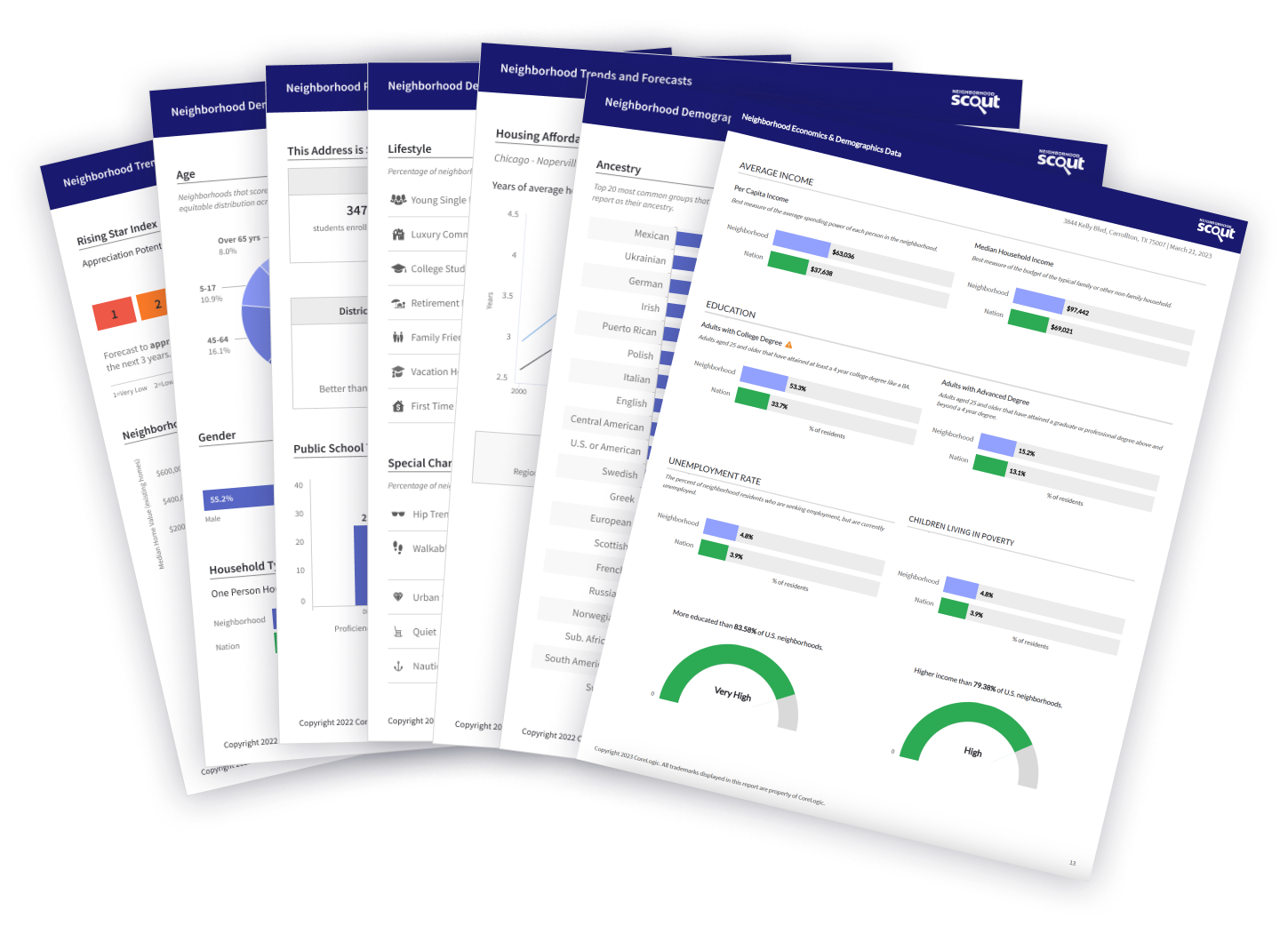
Real Estate includes:
Average Home Values
Rental Market
Housing Market Details
Neighborhood Setting
Economics & Demographics include:
Lifestyle & Special Character
Household Types
Commute To Work
Migration & Mobility
Race & Ethnic Diversity
Employment Industries & Occupations
Income & Unemployment Rate
Higher Education Attainment
Crime includes:
Neighborhood Crime Index
Crimes Per Square Mile
Property Crime Comparison
Violent Crime Comparison
Schools include:
School Ratings
Schools In District
Public School Test Scores
School District Enrollment
Educational Expenditures

comparable neighborhoods nearby