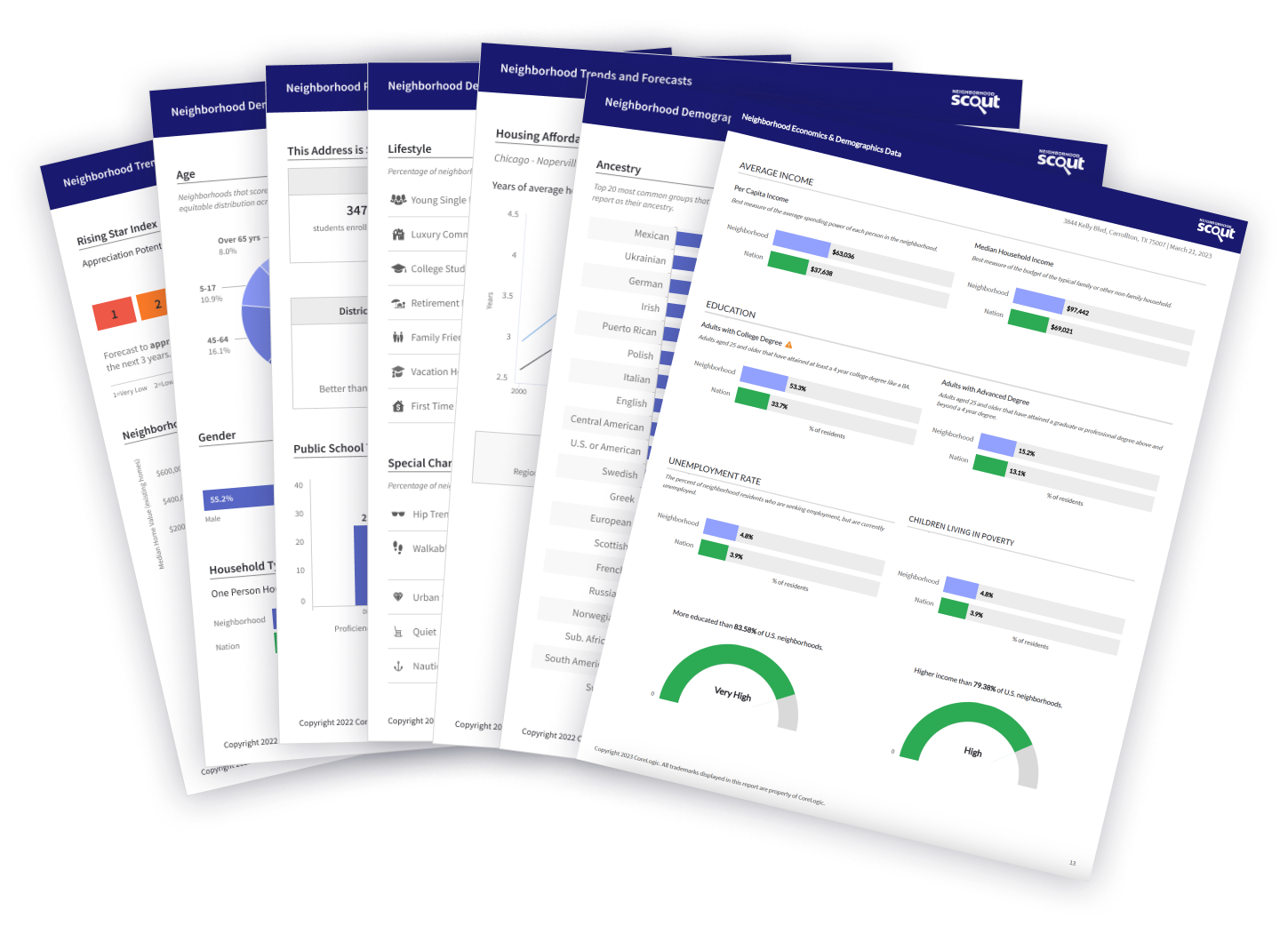
Falls City is a tiny city located in the state of Texas. With a population of 513 people and just one neighborhood, Falls City is the 933rd largest community in Texas. Much of the housing stock in Falls City was built relatively recently. The construction of new real estate can often be taken as an indication that the local Falls City economy is robust, and that jobs or other amenities are attracting an influx of new residents. This seems to be the case in Falls City, where the median household income is $56,339.00.
Unlike some cities, Falls City isn’t mainly white- or blue-collar. Instead, the most prevalent occupations for people in Falls City are a mix of both white- and blue-collar jobs. Overall, Falls City is a city of sales and office workers, professionals, and transportation and shipping workers. There are especially a lot of people living in Falls City who work in office and administrative support (15.22%), sales jobs (13.84%), and management occupations (9.34%).
Of important note, Falls City is also a city of artists. Falls City has more artists, designers and people working in media than 90% of the communities in America. This concentration of artists helps shape Falls City’s character.
Falls City is a good choice for families with children because of several factors. Many other families with children live here, making it a place where both parents and children are more likely to develop social ties with other families. The city’s good public school district and large population of college-educated adults provide an environment conducive to academic success. Many people own their own single-family homes, providing areas for children to play and stability in the community. Finally, Falls City’s overall crime rate ranks among the lowest in the country, making it one of the safest places to raise a family.
Being a small city, Falls City does not have a public transit system used by locals to get to and from work.
In terms of college education, Falls City is substantially better educated than the typical community in the nation, which has 21.84% of the adults holding a bachelor's degree or graduate degree: 29.97% of adults in Falls City have a college degree.
The per capita income in Falls City in 2022 was $36,843, which is upper middle income relative to Texas, and middle income relative to the rest of the US. This equates to an annual income of $147,372 for a family of four. However, Falls City contains both very wealthy and poor people as well.
Falls City is a very ethnically-diverse city. The people who call Falls City home describe themselves as belonging to a variety of racial and ethnic groups. The greatest number of Falls City residents report their race to be White. Falls City also has a sizeable Hispanic population (people of Hispanic origin can be of any race). People of Hispanic or Latino origin account for 26.25% of the city’s residents. Important ancestries of people in Falls City include Polish, German, Irish, Italian, and French.
The most common language spoken in Falls City is English. Other important languages spoken here include Polish and Spanish.
The way a neighborhood looks and feels when you walk or drive around it, from its setting, its buildings, and its flavor, can make all the difference. This neighborhood has some really cool things about the way it looks and feels as revealed by NeighborhoodScout's exclusive research. This might include anything from the housing stock to the types of households living here to how people get around.
If you are planning to retire in Texas, this neighborhood should be on your must-see list. For many reasons, may be considered a retiree's dream neighborhood. According to NeighborhoodScout's exclusive analysis and metrics, it's peaceful and quiet, has above average safety from crime compared to other neighborhoods in Texas, while also offering a diverse range of housing options. This, along with the vibrant mix of very educated seniors and other age groups who choose to live here, makes the neighborhood more retiree-friendly than 98.0% of neighborhoods in TX. If a Texas retirement is in your future, this neighborhood should be one of the places you visit. In addition to being an excellent choice for active retirees, this neighborhood is also a very good choice for families with school-aged children.
Uncrowded roads, rural America and space to be the individual you are. If you like these characteristics, this neighborhood may fit you. With just 6 residents per square mile, is less crowded than 97.9% of all U.S. neighborhoods.
Did you know that the neighborhood has more Polish ancestry people living in it than nearly any neighborhood in America? It's true! In fact, 45.0% of this neighborhood's residents have Polish ancestry.
is also pretty special linguistically. Significantly, 2.3% of its residents five years old and above primarily speak Greek at home. While this may seem like a small percentage, it is higher than 99.4% of the neighborhoods in America.
How wealthy a neighborhood is, from very wealthy, to middle income, to low income is very formative with regard to the personality and character of a neighborhood. Equally important is the rate of people, particularly children, who live below the federal poverty line. In some wealthy gated communities, the areas immediately surrounding can have high rates of childhood poverty, which indicates other social issues. NeighborhoodScout's analysis reveals both aspects of income and poverty for this neighborhood.
The neighbors in the neighborhood in Falls City are upper-middle income, making it an above average income neighborhood. NeighborhoodScout's exclusive analysis reveals that this neighborhood has a higher income than 64.9% of the neighborhoods in America. In addition, 2.7% of the children seventeen and under living in this neighborhood are living below the federal poverty line, which is a lower rate of childhood poverty than is found in 71.9% of America's neighborhoods.
A neighborhood is far different if it is dominated by enlisted military personnel rather than people who earn their living by farming. It is also different if most of the neighbors are clerical support or managers. What is wonderful is the sheer diversity of neighborhoods, allowing you to find the type that fits your lifestyle and aspirations.
In the neighborhood, 40.2% of the working population is employed in executive, management, and professional occupations. The second most important occupational group in this neighborhood is manufacturing and laborer occupations, with 26.2% of the residents employed. Other residents here are employed in clerical, assistant, and tech support occupations (17.7%), and 15.8% in sales and service jobs, from major sales accounts, to working in fast food restaurants.
The languages spoken by people in this neighborhood are diverse. These are tabulated as the languages people preferentially speak when they are at home with their families. The most common language spoken in the neighborhood is English, spoken by 88.5% of households. Other important languages spoken here include Spanish, Greek and Polish.
Boston's Beacon Hill blue-blood streets, Brooklyn's Orthodox Jewish enclaves, Los Angeles' Persian neighborhoods. Each has its own culture derived primarily from the ancestries and culture of the residents who call these neighborhoods home. Likewise, each neighborhood in America has its own culture – some more unique than others – based on lifestyle, occupations, the types of households – and importantly – on the ethnicities and ancestries of the people who live in the neighborhood. Understanding where people came from, who their grandparents or great-grandparents were, can help you understand how a neighborhood is today.
In the neighborhood in Falls City, TX, residents most commonly identify their ethnicity or ancestry as Polish (45.0%). There are also a number of people of German ancestry (29.9%), and residents who report Mexican roots (9.9%), and some of the residents are also of Irish ancestry (7.7%), along with some English ancestry residents (7.6%), among others.
How you get to work – car, bus, train or other means – and how much of your day it takes to do so is a large quality of life and financial issue. Especially with gasoline prices rising and expected to continue doing so, the length and means of one's commute can be a financial burden. Some neighborhoods are physically located so that many residents have to drive in their own car, others are set up so many walk to work, or can take a train, bus, or bike. The greatest number of commuters in neighborhood spend between 15 and 30 minutes commuting one-way to work (38.5% of working residents), which is shorter than the time spent commuting to work for most Americans.
Here most residents (80.5%) drive alone in a private automobile to get to work. In addition, quite a number also carpool with coworkers, friends, or neighbors to get to work (10.4%) . In a neighborhood like this, as in most of the nation, many residents find owning a car useful for getting to work.