Edison median real estate price is $938,880, which is more expensive than 78.3% of the neighborhoods in Washington and 89.0% of the neighborhoods in the U.S.
The average rental price in Edison is currently $2,283, based on NeighborhoodScout's exclusive analysis. Rents here are currently lower in price than 61.8% of Washington neighborhoods.
Edison is a remote neighborhood (based on population density) located in Bow, Washington. This is a coastal neighborhood (i.e., is on the ocean, a bay, or inlet).
Edison real estate is primarily made up of medium sized (three or four bedroom) to small (studio to two bedroom) single-family homes and mobile homes. Most of the residential real estate is owner occupied. Many of the residences in the Edison neighborhood are established but not old, having been built between 1970 and 1999. A number of residences were also built before 1940.
Vacant apartments or homes are a major fact of life in Edison. The current real estate vacancy rate here is 23.6%. This is higher than the rate of vacancies in 91.9% of all U.S. neighborhoods. A relatively large percentage of housing here is seasonally occupied (18.9%). This can occur in vacation areas, and occasionally it is also found in neighborhoods that are primarily filled with college students, as some apartments could be vacant when school is not in session. If you live here year round, you may find that a number of buildings in your neighborhood are actually empty.
When you see a neighborhood for the first time, the most important thing is often the way it looks, like its homes and its setting. Some places look the same, but they only reveal their true character after living in them for a while because they contain a unique mix of occupational or cultural groups. This neighborhood is very unique in some important ways, according to NeighborhoodScout's exclusive exploration and analysis.
Edison is a neighborhood that is on the ocean, a bay, or inlet. Many times, such places have amenities that bring locals and visitors to the waterfront for recreational activities or to check out the scenery. In some densely populated areas that are less financially well-off, the neighborhood waterfront can be relatively industrial and less open to recreation. In addition to being coastal, Edison is a very nautical neighborhood, meaning that it is somewhat historic, walkable, densely populated and on the water. This gives the neighborhood a very nautical feel, with some seaside and shipping feel, which some may really enjoy the sights and sounds of.
Astoundingly, NeighborhoodScout's research reveals that this single neighborhood has a higher concentration of married couples living here than 99.0% of all U.S. neighborhoods. Whether they have school-aged children or not, married couples are the rule in the Edison neighborhood. If you are a married couple, you may find many people here with a similar lifestyle, and perhaps common interests. But if you are single, you might not find many other singles here.
In addition, if you are planning to retire in Washington, this neighborhood should be on your must-see list. For many reasons, Edison may be considered a retiree's dream neighborhood. According to NeighborhoodScout's exclusive analysis and metrics, it's peaceful and quiet, has above average safety from crime compared to other neighborhoods in Washington, while also offering a diverse range of housing options. This, along with the vibrant mix of very educated seniors and other age groups who choose to live here, makes the neighborhood more retiree-friendly than 97.2% of neighborhoods in WA. If a Washington retirement is in your future, this neighborhood should be one of the places you visit.
Most American households own a car or other vehicle. Many own two cars or perhaps three. In the United States, it is useful to have an automobile not only for commuting, but also for shopping and getting to other services one needs. But NeighborhoodScout's analysis revealed that households in the Edison neighborhood have a highly unusual car ownership. Residents of this neighborhood must really love automobiles. NeighborhoodScout's Analysis reveals that 37.7% of the households here have four, five, or more cars. That is more cars per household than in 97.4% of the neighborhoods in the nation.
It used to be that most Americans lived on the farm, or otherwise made their living from the land, the forests, or the sea. With global trade and an economy increasingly based on providing services to one another, fewer people farm, fish or harvest timber now than at any time in American history. But according to NeighborhoodScout's leading analysis, the Edison neighborhood stands apart from most American neighborhood due to the proportion of its residents still working in these fields. With 4.7% of the workforce so employed, this neighborhood has a greater concentration of such workers than 96.7% of U.S. neighborhoods.
Did you know that the Edison neighborhood has more Norwegian and Swedish ancestry people living in it than nearly any neighborhood in America? It's true! In fact, 10.1% of this neighborhood's residents have Norwegian ancestry and 5.6% have Swedish ancestry.
There are two complementary measures for understanding the income of a neighborhood's residents: the average and the extremes. While a neighborhood may be relatively wealthy overall, it is equally important to understand the rate of people - particularly children - who are living at or below the federal poverty line, which is extremely low income. Some neighborhoods with a lower average income may actually have a lower childhood poverty rate than another with a higher average income, and this helps us understand the conditions and character of a neighborhood.
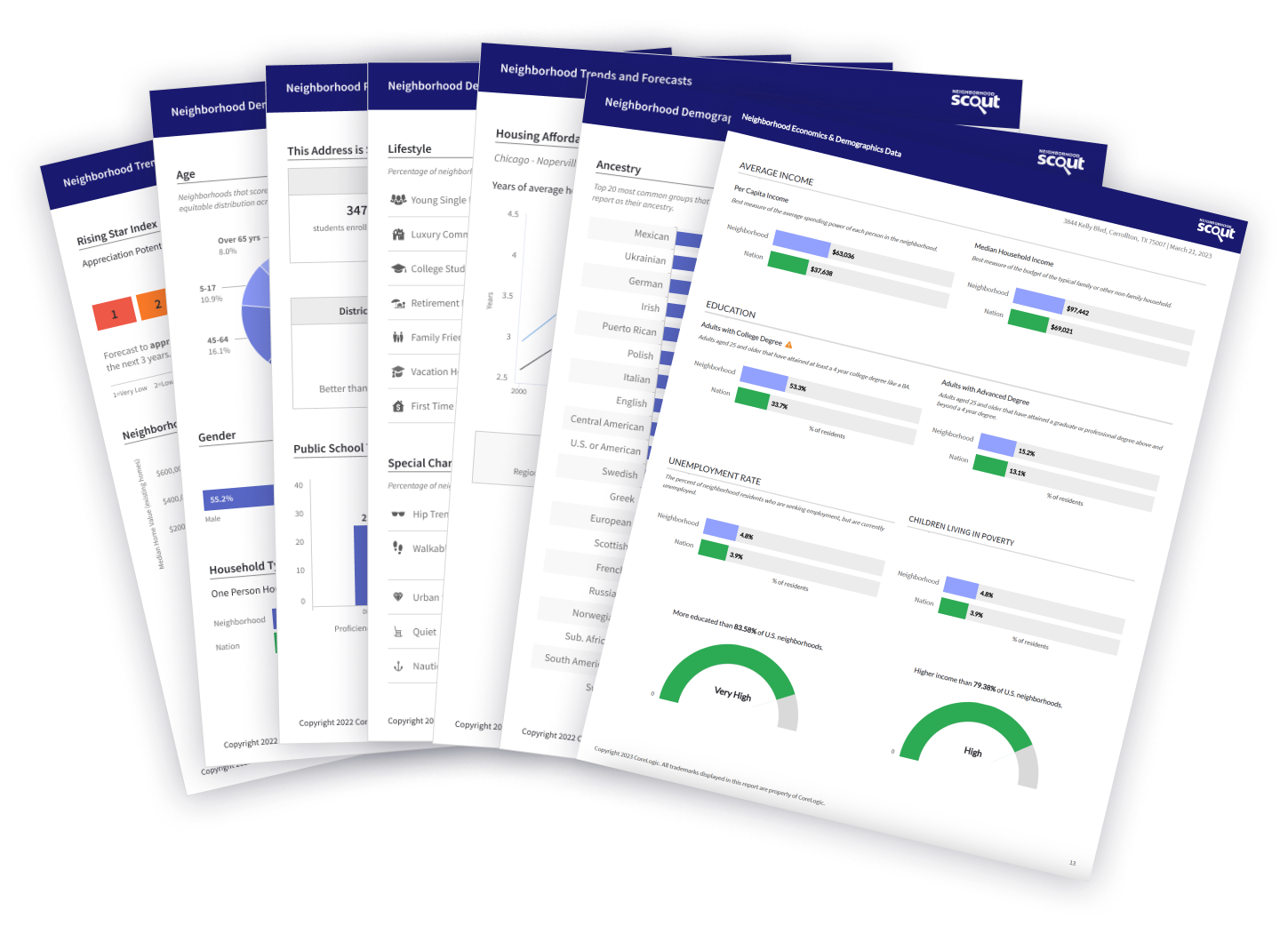
The neighbors in the Edison neighborhood in Bow are upper-middle income, making it an above average income neighborhood. NeighborhoodScout's exclusive analysis reveals that this neighborhood has a higher income than 77.3% of the neighborhoods in America. In addition, 0.6% of the children seventeen and under living in this neighborhood are living below the federal poverty line, which is a lower rate of childhood poverty than is found in 79.5% of America's neighborhoods.
What we choose to do for a living reflects who we are. Each neighborhood has a different mix of occupations represented, and together these tell you about the neighborhood and help you understand if this neighborhood may fit your lifestyle.
In the Edison neighborhood, 45.0% of the working population is employed in executive, management, and professional occupations. The second most important occupational group in this neighborhood is manufacturing and laborer occupations, with 19.3% of the residents employed. Other residents here are employed in clerical, assistant, and tech support occupations (16.4%), and 14.6% in sales and service jobs, from major sales accounts, to working in fast food restaurants.
The languages spoken by people in this neighborhood are diverse. These are tabulated as the languages people preferentially speak when they are at home with their families. The most common language spoken in the Edison neighborhood is English, spoken by 87.5% of households. Other important languages spoken here include Spanish, Polish and Italian.
Culture is the shared learned behavior of peoples. Undeniably, different ethnicities and ancestries have different cultural traditions, and as a result, neighborhoods with concentrations of residents of one or another ethnicities or ancestries will express those cultures. It is what makes the North End in Boston so fun to visit for the Italian restaurants, bakeries, culture, and charm, and similarly, why people enjoy visiting Chinatown in San Francisco.
In the Edison neighborhood in Bow, WA, residents most commonly identify their ethnicity or ancestry as English (17.4%). There are also a number of people of Irish ancestry (10.6%), and residents who report Norwegian roots (10.1%), and some of the residents are also of Mexican ancestry (10.1%), along with some German ancestry residents (9.5%), among others. In addition, 10.3% of the residents of this neighborhood were born in another country.
How you get to work – car, bus, train or other means – and how much of your day it takes to do so is a large quality of life and financial issue. Especially with gasoline prices rising and expected to continue doing so, the length and means of one's commute can be a financial burden. Some neighborhoods are physically located so that many residents have to drive in their own car, others are set up so many walk to work, or can take a train, bus, or bike. The greatest number of commuters in Edison neighborhood spend between 30 and 45 minutes commuting one-way to work (33.4% of working residents), which is at or a bit above the average length of a commute across all U.S. neighborhoods.
Here most residents (71.0%) drive alone in a private automobile to get to work. In addition, quite a number also carpool with coworkers, friends, or neighbors to get to work (6.3%) . In a neighborhood like this, as in most of the nation, many residents find owning a car useful for getting to work.