menu


Real Estate Prices & Overview

Median real estate price in the City Center of Mattawa is $512,438, which is less expensive than 67.7% of Washington neighborhoods and 33.2% of all U.S. neighborhoods.

The average rental price in Mattawa City Center is currently $1,569, based on NeighborhoodScout's exclusive analysis. Rents here are currently lower in price than 88.3% of Washington neighborhoods.

Mattawa City Center is a remote neighborhood (based on population density) located in Mattawa, Washington.

Real estate in the City Center of Mattawa, WA is primarily made up of medium sized (three or four bedroom) to small (studio to two bedroom) mobile homes and single-family homes. Most of the residential real estate is occupied by a mixture of owners and renters. Many of the residences in the City Center neighborhood are established but not old, having been built between 1970 and 1999. A number of residences were also built between 2000 and the present.

Mattawa City Center has a 10.1% vacancy rate, which is well above average compared to other U.S. neighborhoods (higher than 64.6% of American neighborhoods). Most vacant housing here is vacant year round. This could either signal that there is a weak demand for real estate in the neighborhood or that large amount of new housing has been built and not yet occupied. Either way, if you live here, you may find many of the homes or apartments are empty.

Notable & Unique Neighborhood Characteristics

Many things matter about a neighborhood, but the first thing most people notice is the way a neighborhood looks and its particular character. For example, one might notice whether the buildings all date from a certain time period or whether shop signs are in multiple languages. This particular neighborhood in Mattawa, the City Center neighborhood, has some outstanding things about the way it looks and its way of life that are worth highlighting.

Occupations

Each year, fewer and fewer Americans make their living as farmers, foresters, or fishers. But the Mattawa City Center neighborhood truly stands out among U.S. neighborhoods. According to exclusive NeighborhoodScout analysis, this neighborhood has a greater proportion of farmers, foresters, or fishers than 100.0% of all American neighborhoods. This is truly a unique cultural characteristic of this neighborhood.

Real Estate

The Mattawa City Center neighborhood stands out for having the majority of its residential real estate made up of mobile homes. In fact, 54.2% of the occupied real estate here are mobile homes, which is a greater proportion than is found in 99.4% of the neighborhoods in the U.S. If you like mobile homes, this might be a great neighborhood in which to look for real estate.

People

NeighborhoodScout's exclusive research revealed that 98.4% of the adult residents in the Mattawa City Center neighborhood do not have a 4-year college degree, which is a lower rate of college graduated adults than found in 98.8% of the neighborhoods in America.

In addition, whether by choice, divorce, or unplanned pregnancy, single moms may have the toughest job in the book. NeighborhoodScout's exclusive analysis reveals that the Mattawa City Center neighborhood has more single mother households than 97.8% of the neighborhoods in the U.S. Often high concentrations of single mother homes can be a strong indicator of family and social issues such as poverty, high rates of school dropouts, crime, and other societal problems.

Modes of Transportation

Our research shows that more people carpool to work here in the Mattawa City Center (25.7%) than in 97.2% of the neighborhoods in America.

Diversity

Did you know that the Mattawa City Center neighborhood has more Mexican ancestry people living in it than nearly any neighborhood in America? It's true! In fact, 84.0% of this neighborhood's residents have Mexican ancestry.

Mattawa City Center is also pretty special linguistically. Significantly, 90.7% of its residents five years old and above primarily speak Spanish at home. This is a higher percentage than 99.7% of all U.S. neighborhoods.

Migration / Stability

Some neighborhoods have more internal cohesiveness than others. While other neighborhoods feel like a collection of strangers who just happen to live near each other. Sometimes this comes down to not only the personalities of the people in a place, but how long people have been together in that neighborhood. NeighborhoodScout's research has revealed some interesting things about the rootedness of people in the Mattawa City Center neighborhood. What is interesting to note, is that the Mattawa City Center neighborhood has a greater percentage of residents born in another country (49.3%) than are found in 97.2% of all U.S. neighborhoods.

The Neighbors

There are two complementary measures for understanding the income of a neighborhood's residents: the average and the extremes. While a neighborhood may be relatively wealthy overall, it is equally important to understand the rate of people - particularly children - who are living at or below the federal poverty line, which is extremely low income. Some neighborhoods with a lower average income may actually have a lower childhood poverty rate than another with a higher average income, and this helps us understand the conditions and character of a neighborhood.

The neighbors in the City Center neighborhood in Mattawa are low income, making it among the lowest income neighborhoods in America. NeighborhoodScout's research shows that this neighborhood has an income lower than 86.9% of U.S. neighborhoods. With 35.6% of the children here below the federal poverty line, this neighborhood has a higher rate of childhood poverty than 86.6% of U.S. neighborhoods.

The old saying "you are what you eat" is true. But it is also true that you are what you do for a living. The types of occupations your neighbors have shape their character, and together as a group, their collective occupations shape the culture of a place.

In the Mattawa City Center neighborhood, 49.3% of the working population is employed in farming, forestry, or commercial fishing. The second most important occupational group in this neighborhood is executive, management, and professional occupations, with 21.9% of the residents employed. Other residents here are employed in manufacturing and laborer occupations (14.8%), and 13.4% in sales and service jobs, from major sales accounts, to working in fast food restaurants.

Languages

The most common language spoken in the Mattawa City Center neighborhood is Spanish, spoken by 90.7% of households. Some people also speak English (8.6%).

Ethnicity / Ancestry

Culture is the shared learned behavior of peoples. Undeniably, different ethnicities and ancestries have different cultural traditions, and as a result, neighborhoods with concentrations of residents of one or another ethnicities or ancestries will express those cultures. It is what makes the North End in Boston so fun to visit for the Italian restaurants, bakeries, culture, and charm, and similarly, why people enjoy visiting Chinatown in San Francisco.

In the City Center neighborhood in Mattawa, WA, residents most commonly identify their ethnicity or ancestry as Mexican (84.0%). There are also a number of people of German ancestry (1.5%), and residents who report English roots (1.4%), and some of the residents are also of Danish ancestry (1.3%), along with some Spanish ancestry residents (1.1%), among others. In addition, 49.3% of the residents of this neighborhood were born in another country.

Getting to Work

Even if your neighborhood is walkable, you may still have to drive to your place of work. Some neighborhoods are located where many can get to work in just a few minutes, while others are located such that most residents have a long and arduous commute. The greatest number of commuters in Mattawa City Center neighborhood spend between 30 and 45 minutes commuting one-way to work (31.9% of working residents), which is at or a bit above the average length of a commute across all U.S. neighborhoods.

Here most residents (59.7%) drive alone in a private automobile to get to work. In addition, quite a number also carpool with coworkers, friends, or neighbors to get to work (25.7%) . In a neighborhood like this, as in most of the nation, many residents find owning a car useful for getting to work.


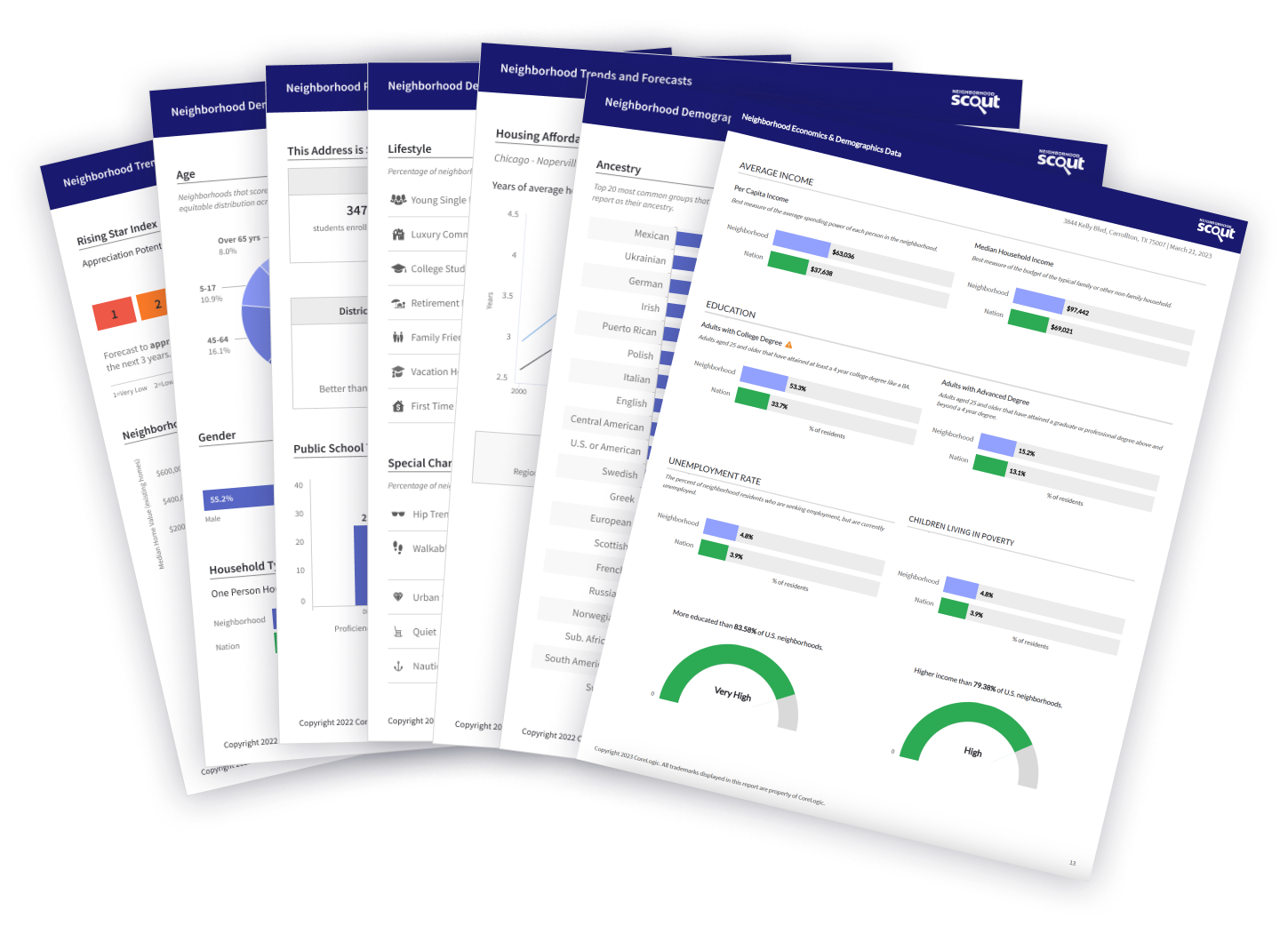
Real Estate includes:
Average Home Values
Rental Market
Housing Market Details
Neighborhood Setting
Economics & Demographics include:
Lifestyle & Special Character
Household Types
Commute To Work
Migration & Mobility
Race & Ethnic Diversity
Employment Industries & Occupations
Income & Unemployment Rate
Higher Education Attainment
Crime includes:
Neighborhood Crime Index
Crimes Per Square Mile
Property Crime Comparison
Violent Crime Comparison
Schools include:
School Ratings
Schools In District
Public School Test Scores
School District Enrollment
Educational Expenditures

comparable neighborhoods nearby